
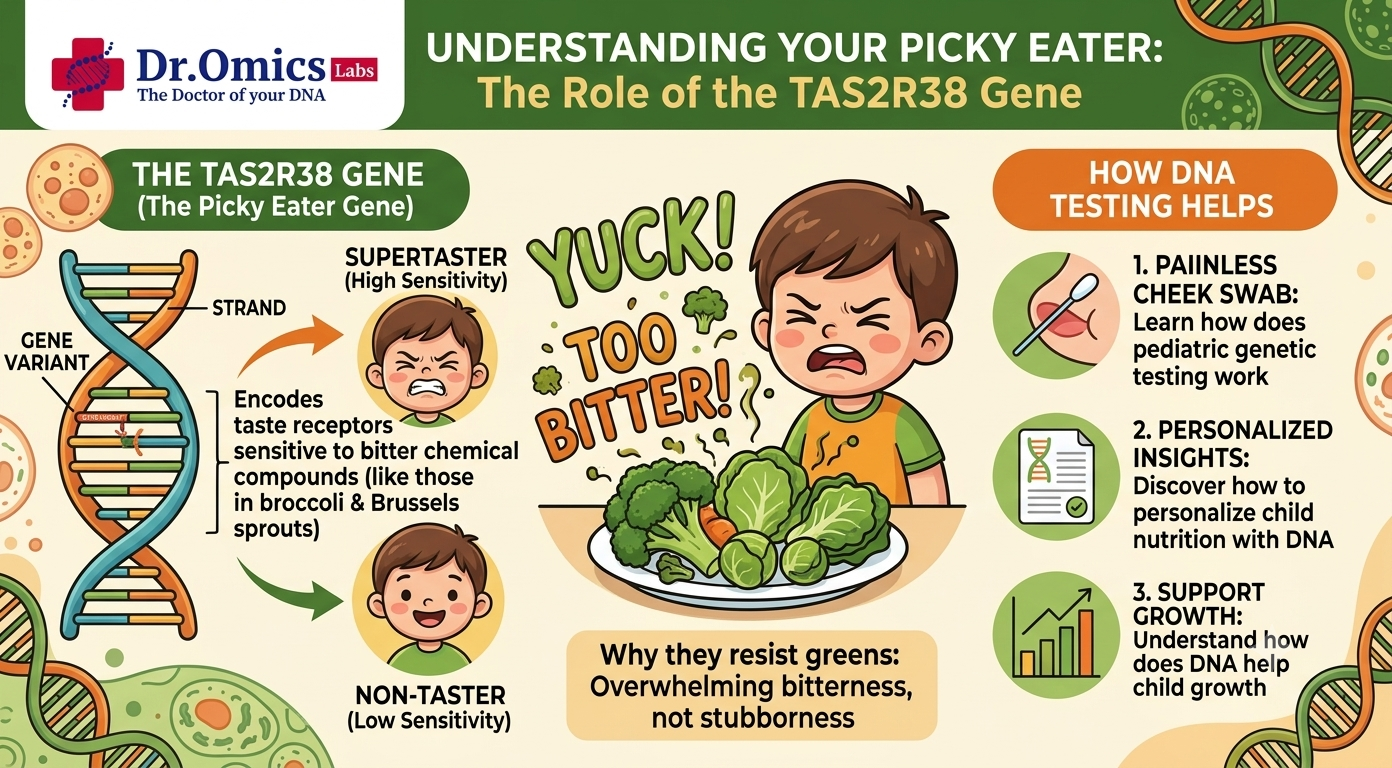
Every parent knows the dread of mealtime showdowns over a serving of broccoli or Brussels sprouts. If your child gags at the sight of green vegetables, it is easy to assume they are just being stubborn. However, recent advances in genetics suggest that the culprit might actually be hardwired into their DNA.
When parents search for answers, one question frequently comes up: what is TAS2R38 picky eater gene? The TAS2R38 gene encodes a specific taste receptor responsible for detecting bitter chemical compounds, such as PTC and PROP, which naturally occur in cruciferous vegetables. Children who inherit specific variants of this gene are classified as “supertasters.” To them, a piece of broccoli doesn’t just taste slightly unpleasant—it tastes overwhelmingly bitter and chemical.
The Science of Swabbing: How It Works
Understanding your child’s sensory world often prompts parents to explore modern genomic options. But how does pediatric genetic testing work? For most consumer and clinical wellness panels, the process is incredibly simple, relying on a quick, non-invasive cheek swab or saliva collection. Because it involves zero needles, is DNA testing safe for children? Yes, the physical collection process is completely safe, painless, and risk-free.
If you decide to try a kit, a common hurdle is how to explain DNA test to a child. A wonderful way to frame it is telling them that their body has a “secret instruction manual,” and a quick swab helps us read that manual so we can figure out why certain foods taste so super-strong to them.
Beyond Taste: What Can a Child DNA Test Reveal?
Unlocking the mysteries of taste is just the tip of the iceberg. Parents often wonder, what can a child DNA test reveal about overall health? These tests can provide a roadmap for structural predispositions. For instance, can DNA test show lactose intolerance in kids? Yes, testing can accurately identify primary lactase deficiency, helping you alter their diet before chronic tummy aches start.
Furthermore, parents frequently look into broader metabolic questions: does DNA predict child obesity risk, and can DNA test identify child allergies? While genetic markers can flag a higher metabolic predisposition to obesity, true allergy identification typically requires clinical IgE blood tests rather than standalone DNA swabbing.
By utilizing these insights, parents can learn how to personalize child nutrition with DNA. Instead of relying on generic dietary guidelines, you can discover how does DNA help child growth by tailoring macronutrient ratios and food textures to your child’s unique biological framework.
Clinical Realities and Medical Guidelines
While wellness panels focus on nutrition, deeper clinical options exist. For complex medical queries, is whole exome sequencing for kids or a chromosomal microarray test appropriate? These advanced tools are used by specialists to determine: can DNA detect developmental delays in children? Yes, by analyzing deep genetic structures, doctors can pinpoint rare variants responsible for developmental or growth challenges.
If you are considering this path, you might wonder, is genetic testing for children recommended by doctors? Pediatricians heavily rely on these tests when there are clear clinical indications. When navigating this, it is crucial to understand what are AAP guidelines for child DNA testing. The American Academy of Pediatrics advises that diagnostic genetic testing is vital for childhood conditions, but predictive testing for adult-onset conditions should be avoided until the child reaches adulthood.
Planning Next Steps
If you are ready to explore your child’s genetic profile, you might ask, what age is best for child genetic testing? For nutritional and wellness insights, the transition to solid foods is an ideal time, whereas diagnostic testing can occur at any age.
Before purchasing, ensure you buy from a reputable laboratory. Are kids DNA tests reliable? Clinical-grade testing is exceptionally accurate, though wellness panels should always be treated as behavioral guidelines rather than definitive medical diagnoses. Lastly, how much does child DNA test cost? Prices range from $100 for basic at-home sensory kits to several thousands for comprehensive pediatric genomic profiling and panels that look at what conditions can child DNA screen for.
Understanding your child’s TAS2R38 variant can completely reframe your approach to nutrition. By trading mealtime frustration for genetic insight, you can stop fighting their biology and start supporting their growth.

