
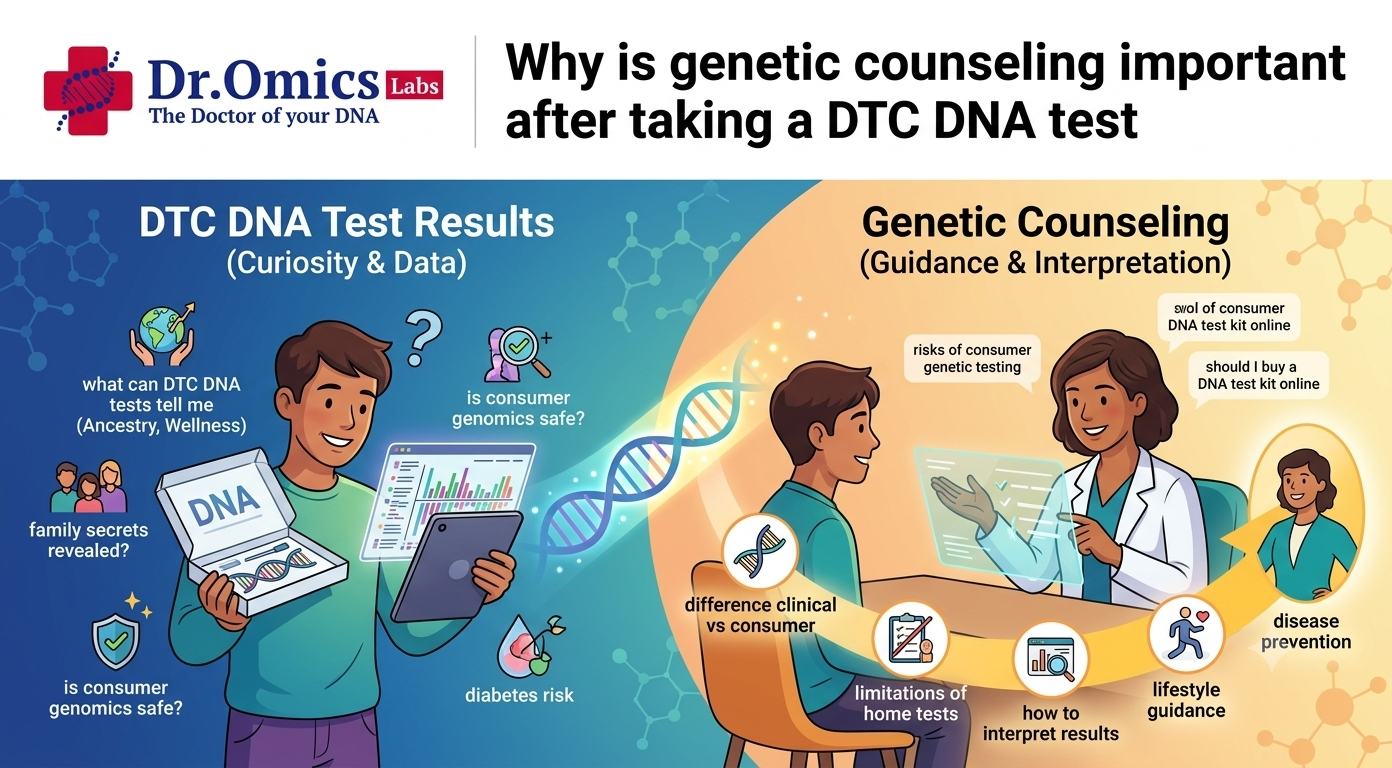
The direct-to-consumer (DTC) genetic testing market has grown exponentially, turning complex molecular biology into a standard online purchase. Millions of people order a DNA test kit online out of pure curiosity. However, unboxing your genomic data is completely different from unboxing a typical consumer product. While these kits provide fascinating insights, understanding what happens after you get your data highlights exactly why is genetic counseling important for DTC testing.
What Do DTC DNA Tests Cover?
Before diving into the results, it helps to understand what do DTC DNA tests cover and what can direct-to-consumer DNA test tell me.
Most at-home kits look at specific genetic markers to provide a breakdown of your ancestral roots, simple physical traits, and broad wellness tendencies. For instance, some platforms offer ancestry health combo tests to check if you carry specific variants associated with conditions like late-onset Alzheimer’s or Parkinson’s disease. They can also look at polygenic risks to see can consumer DNA test show diabetes risk or general cardiovascular predispositions.
Lately, alternative methods like hair DNA analysis have emerged on the market. Consumers often wonder: what is hair DNA analysis used for and can hair DNA test show deficiencies? Unlike saliva-based DNA testing that looks at your inherited genetic blueprint, commercial hair testing is often marketed for heavy metal screening or nutritional deficiencies—though its scientific validity is heavily debated compared to standard DNA sequencing.
The Limitations: Clinical vs. Consumer DNA Tests
A major reason to seek professional guidance is understanding the fundamental difference between clinical and consumer DNA test models.
- The Scope: A consumer kit typically skims a small fraction of your genome (genotyping). A clinical test, ordered by a doctor, sequences entire genes letter-by-letter to find rare, high-risk mutations.
- The Accuracy: While standard ancestry health combo tests are relatively accurate at reading the specific markers they target, they miss the bigger picture. For example, when questioning are heart DNA test kits accurate, the answer is that they only check a few common variants. They completely miss thousands of other mutations that a clinical-grade panel would catch.
Because of these limitations of at home DNA tests, a negative result does not mean you are completely clear of risk, and a positive result does not guarantee you will get sick.
Risks, Ethical Concerns, and Family Secrets
There are distinct risks of consumer genetic testing and several ethical concerns of DTC testing that buyers rarely consider before purchasing.
Unexpected Discoveries: One of the most profound disruptions is that can consumer genomics reveal family secrets. It is incredibly common for individuals to inadvertently discover non-paternity events, unknown siblings, or hidden adoptions through relative-matching features.
Additionally, questions regarding is consumer genomics safe extend beyond physical safety to data privacy. Who owns your genetic data once it is on a corporate server, and how might it impact your relatives? These are vital things what to consider before buying DNA kit options online.
The Role of a Genetic Counselor: How to Interpret Consumer DNA Results
If a DTC test can guide lifestyle changes—like tweaking your diet or exercise—interpreting those changes safely requires an expert.
Learning how to interpret consumer DNA results on your own is highly prone to error. Genetic counselors are trained medical professionals who translate raw genomic data into actionable health steps. They contextually evaluate your personal health history and family medical tree alongside your DTC report.
If your at-home kit flags a scary health variant, a genetic counselor determines if the finding is a false positive (which is common in raw data downloads) or if it warrants clinical validation. They provide the psychological support and medical pathways needed to navigate life-altering information, ensuring you don’t make drastic healthcare decisions based on an unverified home report.
Final Takeaway
The how does DTC genetic testing market grow trajectory shows no signs of slowing down. While satisfying your genetic curiosity is empowering, your DNA is not a DIY project. If you choose to explore your genome independently, pairing your results with a certified genetic counselor is the safest, most responsible way to turn raw data into real peace of mind.

