
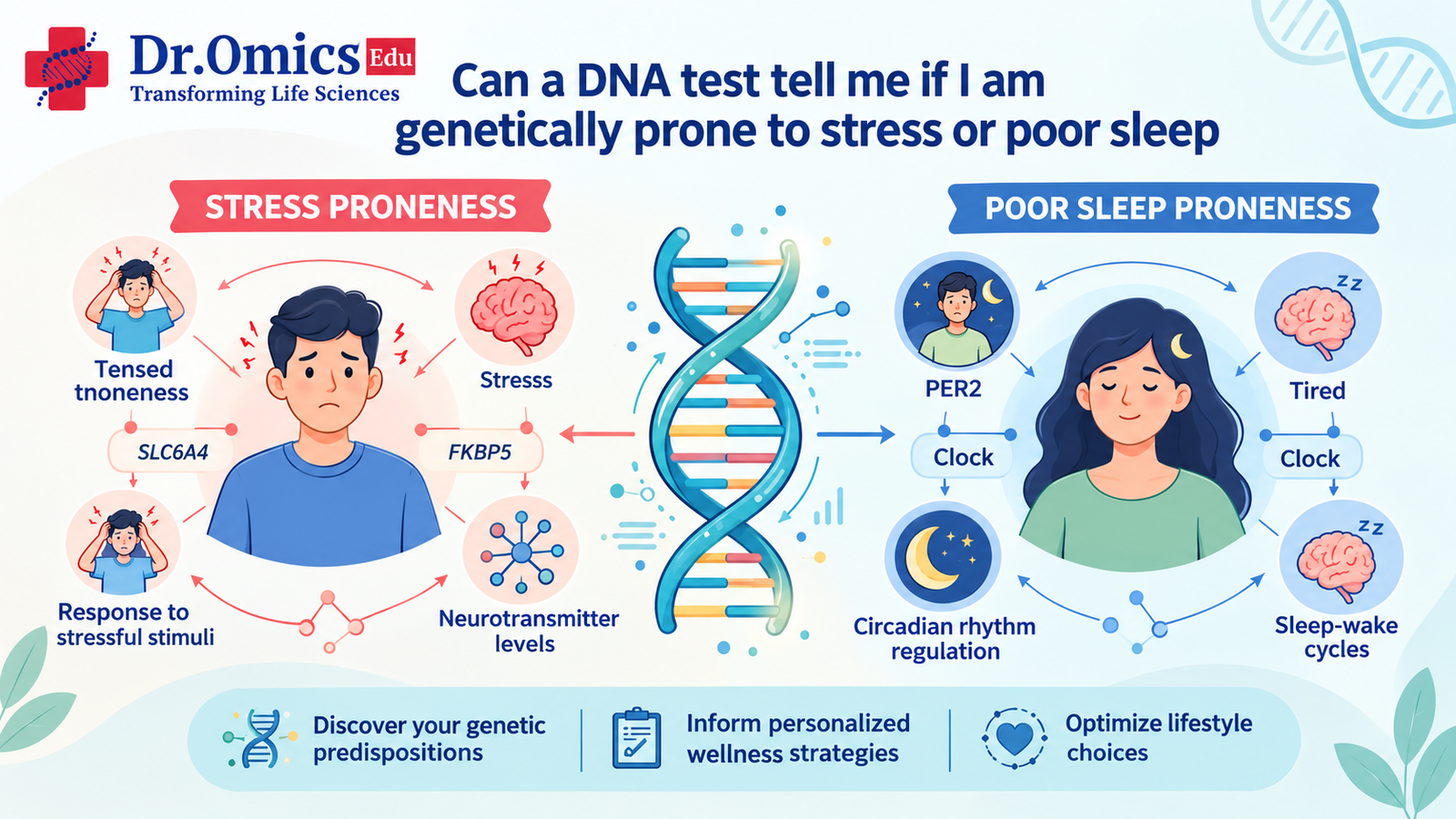
Many people struggle with chronic stress, restless nights, or waking up feeling exhausted despite getting enough sleep. While lifestyle plays a major role, your genes can also influence how your body responds to stress and regulates sleep. This has led many people to ask: Can a DNA test tell me if I am genetically prone to stress or poor sleep?
The answer is yes—but with important context. A wellness DNA test can identify genetic variants associated with stress response, circadian rhythm, melatonin metabolism, and other biological pathways that influence sleep quality. However, genes are only one piece of the puzzle.
What Can a Wellness DNA Test Tell Me?
If you’ve ever wondered what can a wellness DNA test tell me, these tests provide insights into inherited traits that affect your overall health and wellness. They can evaluate genetic markers related to stress resilience, sleep cycles, metabolism, inflammation, nutrient processing, exercise response, and healthy aging.
Understanding these traits can help you make more informed lifestyle decisions rather than relying on generic health advice.
How Does a DNA Health Test Work?
A common question is how does a DNA health test work. Most tests require a saliva or cheek-swab sample, which is analyzed for specific genetic variants. The results are interpreted using scientific research to estimate how your genes may influence various wellness traits.
People often ask whether can at home DNA testing be trusted. Reputable laboratories using validated testing methods can provide reliable genetic information, although the interpretation should always be viewed as guidance rather than a diagnosis.
Can DNA Testing Improve My Sleep?
Research has identified genes involved in melatonin production, circadian rhythm, and sleep duration. Therefore, can DNA testing improve my sleep is a reasonable question. While the test itself won’t improve sleep, it can reveal genetic tendencies that help personalize recommendations for bedtime routines, light exposure, caffeine intake, exercise timing, and nutrition.
Similarly, understanding what lifestyle changes based on DNA may be appropriate can help optimize daily habits for better rest and stress management.
Beyond Sleep: A Broader Picture of Wellness
Many people also ask does DNA testing predict disease risk. Wellness genetic testing identifies predispositions—not certainties. Your environment, diet, exercise, and lifestyle significantly influence whether genetic risks become health problems.
Modern wellness reports may also explain what does my DNA say about inflammation, which can affect recovery, energy, and long-term health. Some panels also explore can DNA test predict heart disease risk by identifying inherited cardiovascular risk factors.
Nutrition is another important area. What is nutrigenomics testing focuses on how your genes influence nutrient metabolism and dietary responses. However, can DNA test show vitamin deficiencies is a misconception—it cannot measure current vitamin levels but may identify genetic variants associated with nutrient utilization. Likewise, can DNA test detect food intolerances is limited; most DNA tests assess genetic predisposition rather than diagnosing true intolerances.
Aging, Epigenetics, and Personalized Health
Another growing field examines how does genetics affect aging alongside what is epigenetic testing. Unlike your DNA sequence, epigenetic markers—such as what does DNA methylation reveal—can reflect how lifestyle and environmental factors influence gene activity over time. DNA methylation studies may provide insights into biological aging, although this science continues to evolve.
Some wellness platforms also incorporate how does pharmacogenomics work, helping individuals understand how their genes may influence responses to certain medications. This information can support healthcare providers in making personalized treatment decisions when clinically appropriate.
Is Preventive Genetic Testing Worth It?
Many individuals ask is preventive genetic testing worth it. For those seeking proactive wellness insights, genetic testing can provide valuable information to guide nutrition, sleep, exercise, and stress-management strategies. The key is understanding how to interpret DNA wellness results alongside medical history, lifestyle, and professional guidance.
As technology continues to improve, how accurate are wellness DNA tests 2026 depends largely on the quality of the laboratory, scientific validation, and responsible interpretation. When performed by accredited providers, wellness DNA testing is generally reliable and is genetic testing for health safe, making it a useful tool for personalized preventive healthcare.
Ultimately, your genes do not determine your destiny. Instead, they provide a personalized blueprint that can help you make informed choices to improve sleep quality, manage stress more effectively, and support long-term health.

