
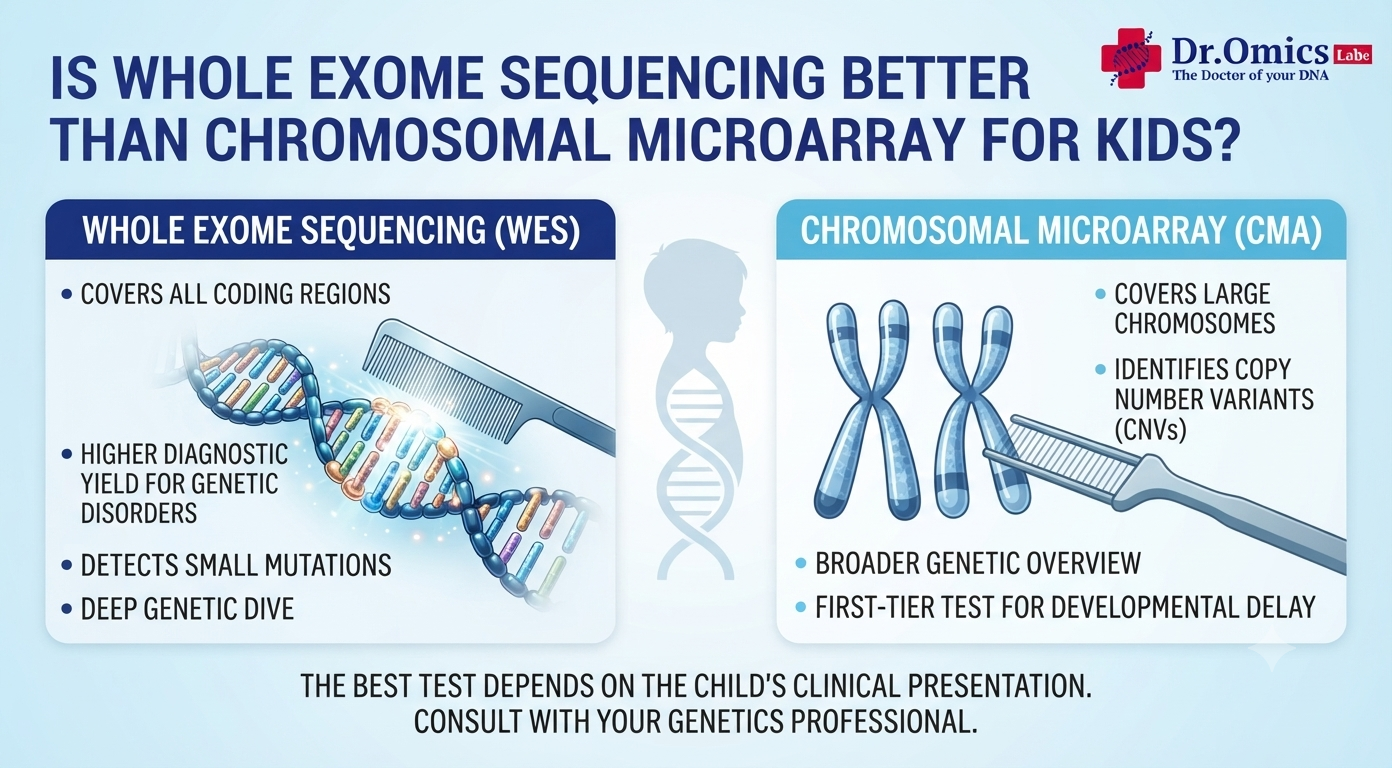
Genetic testing has revolutionized how we understand pediatric health, offering insights that range from diagnosing developmental delays to tailoring nutrition. For parents and clinicians, choosing the right diagnostic tool is a pivotal decision. Among the most common inquiries is whether whole exome sequencing (WES) is superior to chromosomal microarray (CMA) for evaluating children with complex health needs.
Understanding the Diagnostic Tools
To determine which test is “better,” we must first look at what they do. Chromosomal microarray (CMA) is often considered a first-tier diagnostic test for individuals with global developmental delay or intellectual disability. It excels at detecting “copy number variants,” such as large sections of DNA that are missing or duplicated.
Whole exome sequencing (WES), by contrast, targets the “exons”—the protein-coding regions of your DNA. Because many genetic conditions are caused by mutations within these specific regions, WES often provides a significantly higher diagnostic yield than CMA. While CMA remains a reliable first-tier tool in many clinical settings due to accessibility and cost, major organizations like the American College of Medical Genetics and Genomics (ACMG) and the American Academy of Pediatrics (AAP) have increasingly suggested that WES (or even whole genome sequencing) be considered a first-tier option for children with developmental delays due to its superior diagnostic performance.
What Can Pediatric Genetic Testing Reveal?
Beyond diagnostic testing for developmental delays, genetic tests serve various purposes:
- Predictive Health: Tests can identify genetic predispositions for conditions like childhood obesity or lactose intolerance.
- Dietary Insights: Some genetic markers, such as the TAS2R38 gene, are associated with “picky eating” and bitter taste perception, helping parents understand a child’s specific food preferences.
- Allergy Risks: While not a replacement for clinical allergy testing, researchers have identified links between specific genetic variants (such as those in the FLG gene) and increased risks for food allergies, including peanut sensitivity.
- Tumor Profiling: In cases of pediatric cancer, genomic profiling helps guide treatment decisions by identifying specific mutations in tumors.
Safety, Reliability, and Guidelines
Parents often ask: is DNA testing safe for children? Physical risks for standard tests—which typically use a simple cheek swab or blood sample—are minimal. The broader concerns are often emotional, social, or related to the potential for future genetic discrimination.
Regarding reliability, while genetic tests are powerful, they are not infallible. A negative result does not always rule out a genetic cause, and some results may be of “unknown significance”. Regarding AAP guidelines, the AAP and ACMG support mandatory genetic screening for all newborns, emphasizing that parents should be fully informed of the benefits and risks.
How to Approach Testing
If your doctor recommends testing, it is important to understand the process. Pediatric genomic profiling and other diagnostic tests should always be discussed with a genetics professional who can explain what the results mean for your child’s health and future.
When explaining the process to a child, keep it simple. Frame the test as a way for doctors to get a “user manual” for how their body works, which helps the medical team provide the best care possible.
Conclusion
Is WES better than CMA? In many cases, yes—WES offers a higher diagnostic yield for complex developmental concerns. However, the “best” test depends entirely on the child’s specific clinical presentation. While genetic testing is a transformative tool for personalizing nutrition and diagnosing conditions, it is one piece of a larger medical puzzle. Always consult with your pediatrician or a genetic counselor to weigh the costs, benefits, and necessity of these tests for your child’s unique needs.

