
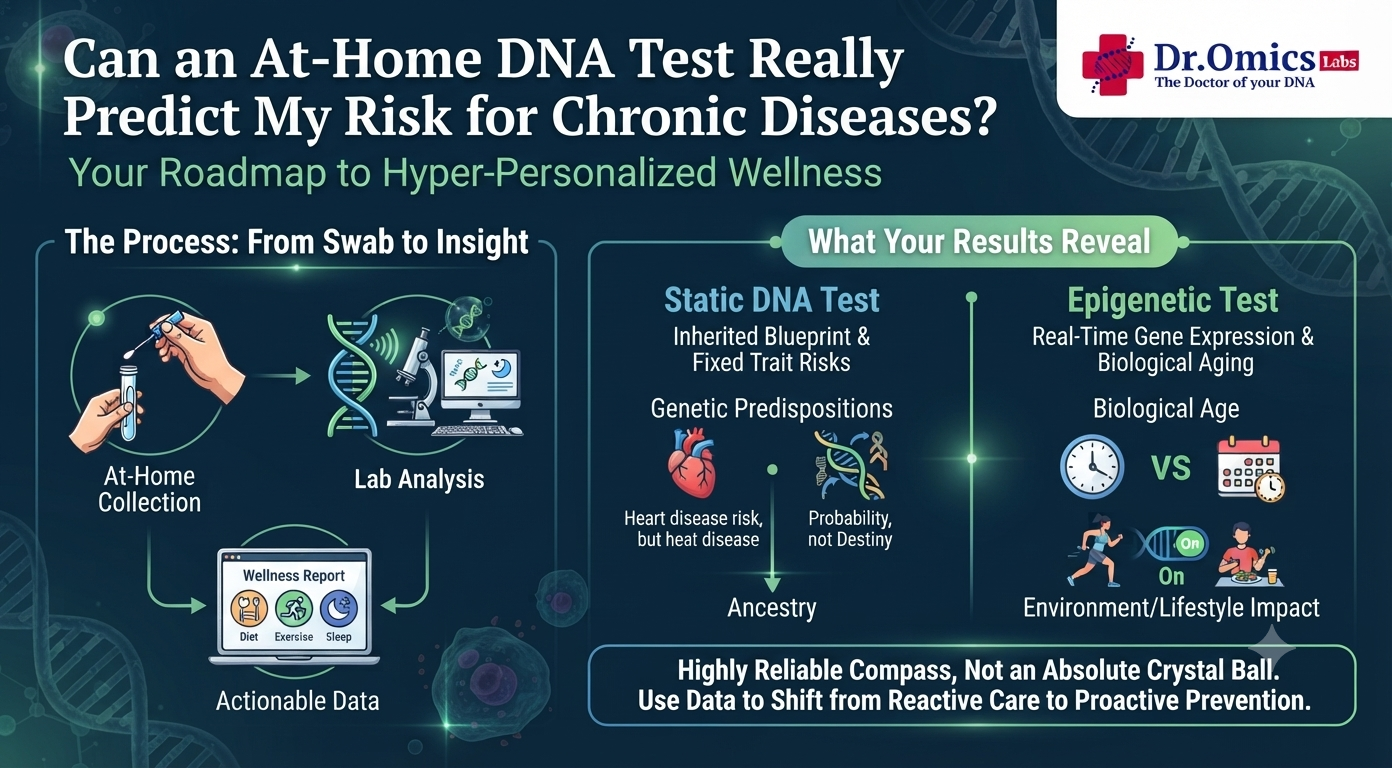
The wellness landscape is experiencing a massive shift toward hyper-personalization. Instead of generic diet and exercise advice, we are looking inward—specifically, at our genetic code. The core question on everyone’s mind is simple: Can an at-home DNA test really predict my risk for chronic diseases?
Let’s dive into how these tests work, what they reveal, and how to use the data safely to transform your health.
How Does a DNA Health Test Work?
To understand if does DNA testing predict disease risk, you first need to understand the mechanism behind it. How does a DNA health test work? It begins with a simple saliva sample or cheek swab that you collect in the comfort of your home. The laboratory extracts your DNA and scans it for specific markers called Single Nucleotide Polymorphisms (SNPs). These variations represent the tiny genetic typos that make you unique and can indicate a higher or lower baseline susceptibility to certain conditions compared to the general population.
What Can a Wellness DNA Test Tell Me?
When you unpack your results, what can a wellness DNA test tell me? A high-quality test screens for multiple facets of your biology, giving you a roadmap to optimize your lifestyle.
- Nutrigenomics Testing: What is nutrigenomics testing? It is the study of how your specific genes interact with the nutrients you consume. It explains why some people thrive on a low-fat diet while others do better on low-carb.
- Nutrient Levels: Can DNA test show vitamin deficiencies? While it can’t tell you your exact current blood levels, it flags if you have genetic variations that impair your ability to absorb or convert specific nutrients, such as Vitamin D or $B_{12}$.
- Sensitivities: Can DNA test detect food intolerances? It can identify genetic predispositions to conditions like lactose intolerance or gluten sensitivity.
- Sleep and Stress: Can DNA testing improve my sleep? By analyzing clock genes and caffeine metabolism markers, these tests offer targeted advice to improve your sleep depth and circadian rhythm.
- Inflammation: What does my DNA say about inflammation? Variations in genes like IL-6 can highlight whether your body has a tendency toward chronic, low-grade systemic inflammation.
Moving Beyond Genetics: Epigenetics and Aging
Your baseline DNA is fixed, but how those genes behave is entirely dynamic. This is where what is epigenetic testing comes into play. Unlike static DNA testing, what is nutrigenomics testing and what is epigenetic testing look at environmental impacts.
Specifically, what does DNA methylation reveal? It shows the chemical tags added to your DNA that turn genes “on” or “off”. Because these tags change based on your environment, tracking them helps you understand how genetics affect aging and reveals your true biological age versus your chronological age.
Static DNA Test ──> Inherited Blueprint & Fixed Trait Risks
Epigenetic Test ──> Real-Time Gene Expression & Biological Aging
Prediction vs. Certainty: Can At-Home DNA Testing Be Trusted?
When assessing how accurate are wellness DNA tests 2026, the science is highly precise regarding your actual genetic data. However, having a genetic risk factor does not equal a medical diagnosis.
For instance, if you are looking to can DNA test predict heart disease risk, the test can only reveal if you have an elevated relative risk for coronary artery conditions. It cannot guarantee you will get sick. Because lifestyle, environment, and diet act as the ultimate switches for these genes, can at home DNA testing be trusted depends entirely on your expectations. They are highly reliable directional compasses, not absolute crystal balls.
How to Personalize Wellness with DNA Safely
If you are wondering is preventive genetic testing worth it, the answer is yes—if you know how to interpret DNA wellness results properly.
- Focus on Actionable Metrics: Use your results to implement targeted what lifestyle changes based on DNA are necessary, such as adjusting your macronutrient ratios or prioritizing recovery.
- Understand Medical Constraints: Know that consumer wellness tests differ from clinical ones. For example, understanding how does pharmacogenomics work (how your genes metabolize medications) can guide future treatments, but should always be verified by a physician before changing prescriptions.
- Safety First: Rest assured that is genetic testing for health safe; the collection process is entirely non-invasive. Always review the privacy policy of the testing company to ensure your data stays secure.
Ultimately, learning how to personalize wellness with DNA empowers you to shift from reactive healthcare to proactive prevention, shifting the odds of long-term health heavily in your favor.

