
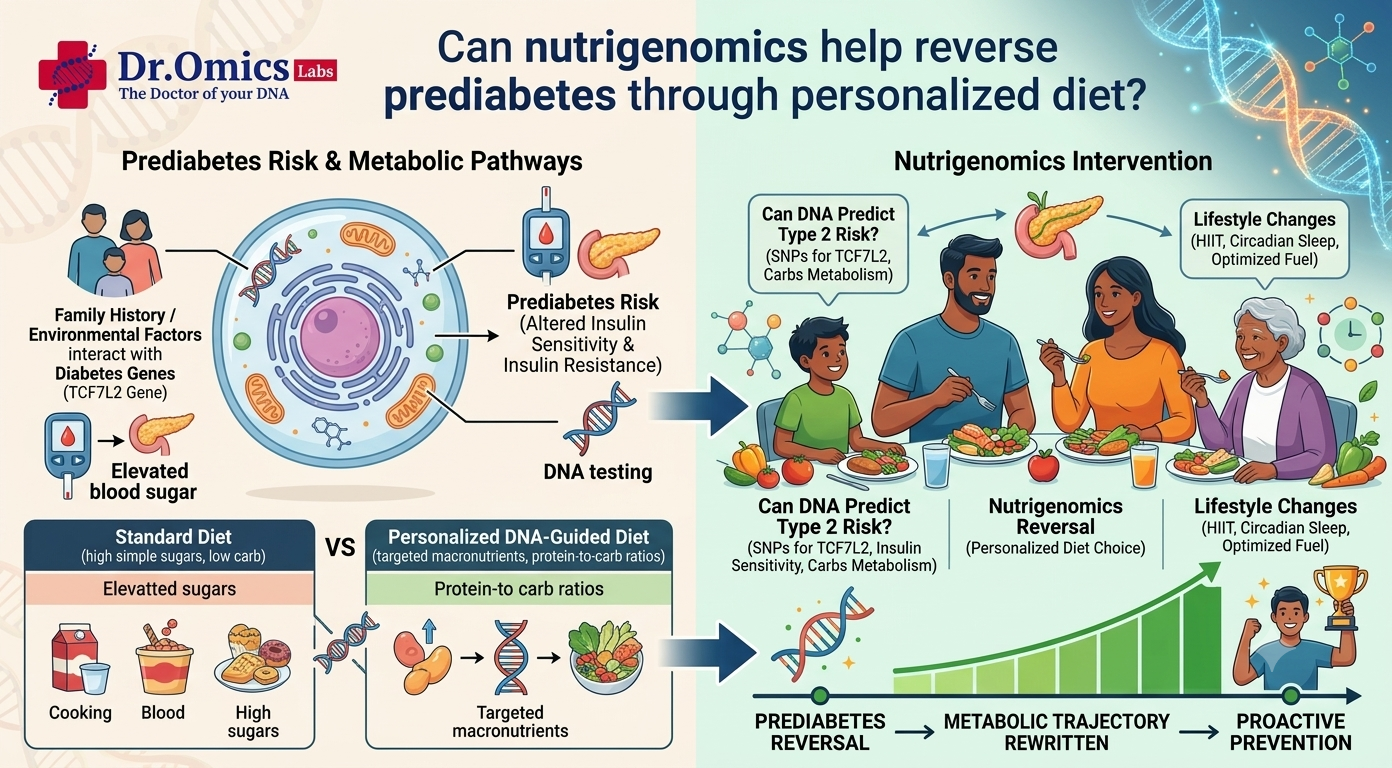
The traditional framework for preventing metabolic disease is rapidly evolving. For decades, the standard advice for managing elevated blood sugar was uniform: cut calories, avoid simple sugars, and walk more. Today, the field of nutrigenomics is completely shifting this paradigm by demonstrating that our bodies process nutrients based on our unique genetic blueprints.
The core question for millions of individuals facing a metabolic crossroads is simple: Can nutrigenomics reverse prediabetes? The answer lies at the intersection of genetic testing, cellular biology, and personalized medicine.
Decoding the Blueprint: Can DNA Predict Type 2 Diabetes Risk?
Before managing a condition, you have to understand your baseline vulnerability. So, can DNA predict Type 2 diabetes risk? Yes. A comprehensive genetic testing for diabetes panel maps out specific markers that dictate your predisposition to metabolic dysfunction.
Family History / Environmental Factors ──> Interact With ──> Specific Diabetes Genes
│
▼
Altered Insulin Sensitivity & Onset Age
When evaluating how does family history affect diabetes genes, it’s crucial to recognize that inherited variations control the baseline functional capacity of your pancreas. While family history points to general susceptibility, DNA mapping looks at precise variations to clarify does DNA determine diabetes onset age or physical susceptibility, turning generic risks into actionable biological data.
The Molecular Drivers: TCF7L2, Insulin Resistance, and Carbohydrate Metabolism
To understand how to prevent diabetes with DNA insights, we must look directly at the specific genes controlling blood sugar.
- The TCF7L2 Gene for Diabetes: What is TCF7L2 gene for diabetes? This gene is widely recognized as one of the strongest common genetic risk factors for Type 2 diabetes. It heavily influences pancreatic beta-cell function and insulin secretion. Variations in this gene impair your body’s natural incretin effect, meaning your pancreas struggles to produce enough insulin in response to food.
- Insulin Resistance and Sensitivity: Understanding how does genetics affect insulin sensitivity helps pinpoint the root cause of high fasting glucose. A high-quality test can DNA show insulin resistance by highlighting defects in cellular glucose transporters, showing whether your cells inherently resist taking up glucose from the bloodstream.
- Carbohydrate Metabolism: What genes affect carbohydrate metabolism? Genetic variations alter how efficiently you process starches and simple sugars. If your profiling reveals a highly sensitive carbohydrate blueprint, a conventional “moderate-carb” diet can cause continuous glucose spikes, driving you closer to a clinical diagnosis.
Personalized Interventions: Can a DNA Test Guide a Diabetes Diet?
Once you have your data, can DNA test guide diabetes diet choices to turn back the clock on prediabetes? Absolutely. This is the essence of nutrigenomics. If you know you carry the TCF7L2 risk variant, a standard low-fat, high-carbohydrate approach will likely backfire. Instead, your nutrigenomics mapping can guide you toward a targeted, higher-protein or specialized fat-to-carbohydrate ratio that protects your beta-cells from overworking.
Implementing customized what lifestyle changes for diabetes genes require action helps you bypass the standard guesswork. For example, some individuals require specific types of high-intensity training to clear blood glucose, while others see massive improvements in insulin sensitivity through targeted circadian sleep optimization.
Clinical Accuracy, Safety, and the Future of Pharmacogenomics
When looking at your options, how accurate are diabetes genetic tests? When processed by clinical-grade platforms, the genomic sequencing of your SNPs is exceptionally precise. It is important to note that what genetic markers for Type 1 diabetes look at (such as HLA complex variations) are entirely distinct from Type 2 or tracking can DNA show gestational diabetes risk during pregnancy.
Furthermore, understanding your profile assists in medical settings. Is pharmacogenomics for diabetes effective? Yes. Determining which diabetes medication based on DNA works best—such as predicting your response to metformin or sulfonylureas via how to personalize diabetes treatment with DNA parameters—saves months of clinical trial-and-error.
Ultimately, is diabetes genetic testing recommended? For anyone looking to shift from reactive disease management to proactive biological prevention, the answer is a resounding yes. Gathering this information is entirely non-invasive, ensuring that is genetic testing for health safe for everyone. Utilizing the latest breakthroughs in diabetes genomics allows you to leverage your unique code, rewrite your metabolic trajectory, and successfully reverse prediabetes.

