
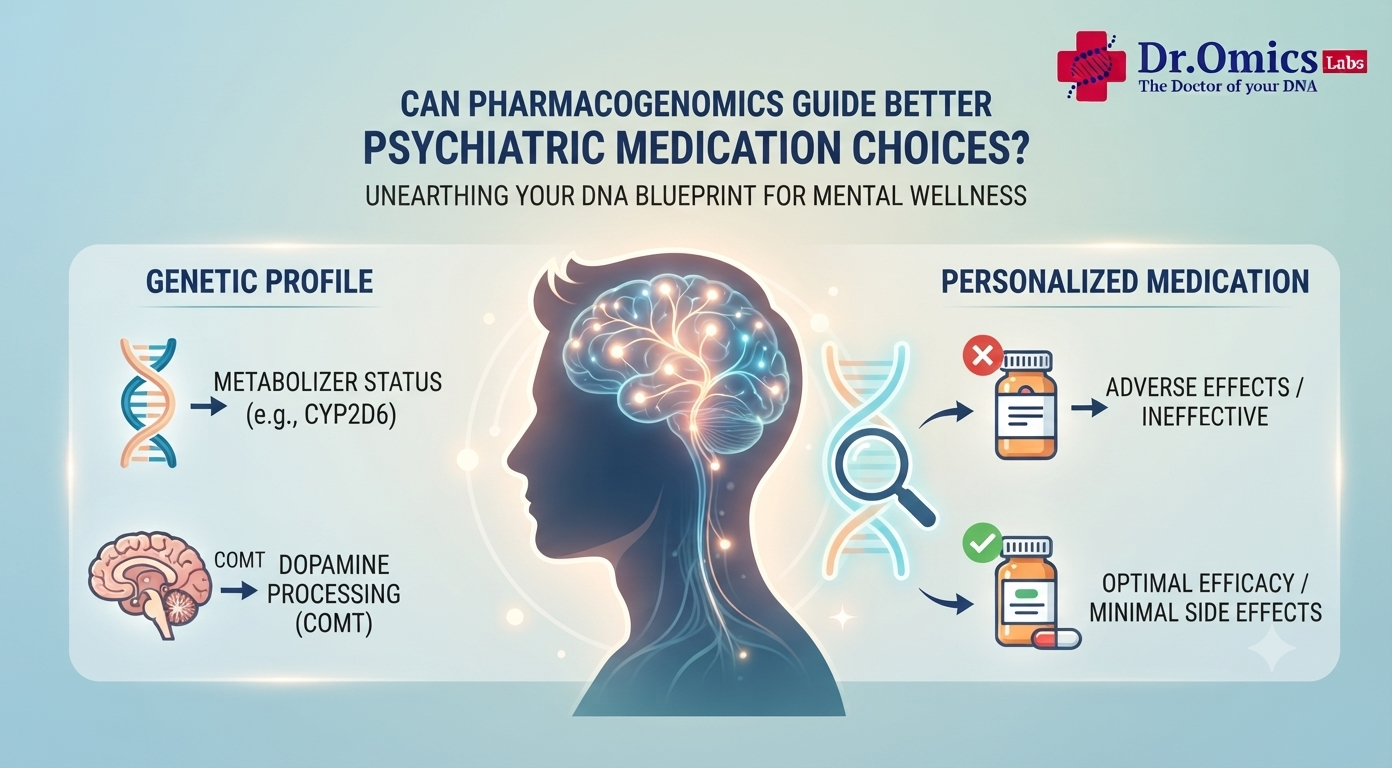
For many patients suffering from depression, anxiety, or other mental health conditions, the journey to finding the right medication is often a frustrating cycle of trial and error. You start one drug, wait weeks for it to take effect, experience unwanted side effects, and then start the process all over again with a different prescription. This is where the emerging field of neurogenomics and pharmacogenomics offers a revolutionary path forward. By asking, can a DNA test guide mental health treatment, we are shifting toward a future where psychiatric care is as personalized as the patient receiving it.
How DNA Affects Medication Response
At the core of this approach is pharmacogenomics—the study of how your genetic makeup affects your response to drugs. Can pharmacogenomics guide psychiatric medication? Yes, by analyzing specific genes involved in how your body metabolizes medications. Many common psychiatric drugs, such as SSRIs and SNRIs, are broken down by enzymes in the liver, primarily those in the cytochrome P450 family. If your genetic variants lead to “ultra-rapid” metabolism, a standard dose may be ineffective because your body clears the drug too quickly. Conversely, “poor metabolizers” may experience toxic side effects because the drug stays in their system at levels that are too high.
This helps address the foundational question: does DNA affect neurotransmitter processing? By understanding your genetic profile, clinicians can predict which medications are more likely to work and which might cause severe adverse reactions, significantly narrowing the list of viable options.
Beyond Medication: The Role of Genetics in Brain Health
While medication optimization is a primary goal, neurogenomics offers a broader view of brain health. For example, the COMT gene for brain health is a critical marker. The COMT enzyme is responsible for breaking down dopamine in the prefrontal cortex. Variations in this gene dictate how quickly you process dopamine, which influences your resilience to stress and how genetics influence depression risk.
Additionally, understanding methylation in brain health—a process that regulates how genes are turned on or off—allows for a more nuanced approach to well-being. By integrating these insights, you learn how to use genetics for stress management, tailoring lifestyle interventions to match your biological temperament.
The Accuracy and Reliability of Neuro Genetic Testing
A common concern is: is neuro genetic testing reliable and how accurate are neuro genetic tests? It is important to emphasize that while pharmacogenomic testing for medication response is clinically validated and supported by regulatory bodies for many common drugs, it is not a replacement for clinical judgment. Genetic testing is one piece of a larger diagnostic puzzle.
When clinicians discuss how to interpret neuro genetic results, they focus on the “actionability” of the data. Genomic insights can help in other areas, such as identifying key neurological genetic markers that contribute to long-term cognitive health or neurodevelopmental predispositions. While we are still learning the full extent of what neurological conditions can genetic testing detect, we know it plays a vital role in diagnostic clarity for complex cases.
Looking Toward the Future
The field is moving fast. Latest breakthroughs in neurogenomics are uncovering what genes affect memory and cognition, potentially guiding early interventions for dementia prevention and identifying risks for Alzheimer’s or Parkinson’s long before symptoms emerge. While can DNA predict Alzheimer’s risk and can DNA show Parkinson’s disease risk are active areas of research, the most immediate impact of current testing remains the personalization of psychiatric care.
Conclusion
Pharmacogenomics is transforming psychiatry from a game of chance into a precision science. By leveraging your genetic data, your healthcare provider can bypass months of trial and error, selecting medications that align with your unique metabolic pathways. While genetic testing cannot predict every aspect of human health, it provides a powerful, evidence-based map for navigating mental health treatment. As our understanding of the genome expands, these tools will become even more integral, ensuring that patients receive the right treatment at the right time, minimizing side effects, and maximizing the potential for recovery.

