
Direct-to-consumer (DTC) genetic testing has transformed the way people access personal health and ancestry information. Today, millions of consumers purchase DNA kits online to explore their genetic makeup without visiting a healthcare provider. But before deciding, should I buy a DNA test kit online? Understanding both the benefits and ethical concerns is essential.
Many people ask, what can direct-to-consumer DNA tests tell me? Depending on the provider, these tests may offer ancestry reports, carrier status for inherited conditions, wellness traits, medication responses, and estimates of disease risks. Some kits even claim to predict whether a consumer DNA test shows diabetes risk or identify heart-related genetic variants. However, these reports should never replace professional medical advice.
One of the biggest concerns is are at home DNA test kits reliable? While many reputable companies use advanced laboratory methods, the accuracy depends on the type of analysis. Results for ancestry are generally reliable, but health predictions often provide only risk estimates rather than confirmed diagnoses. Likewise, people often wonder how accurate are ancestry health combo tests. These tests can be useful for educational purposes but have limitations in predicting future health outcomes.
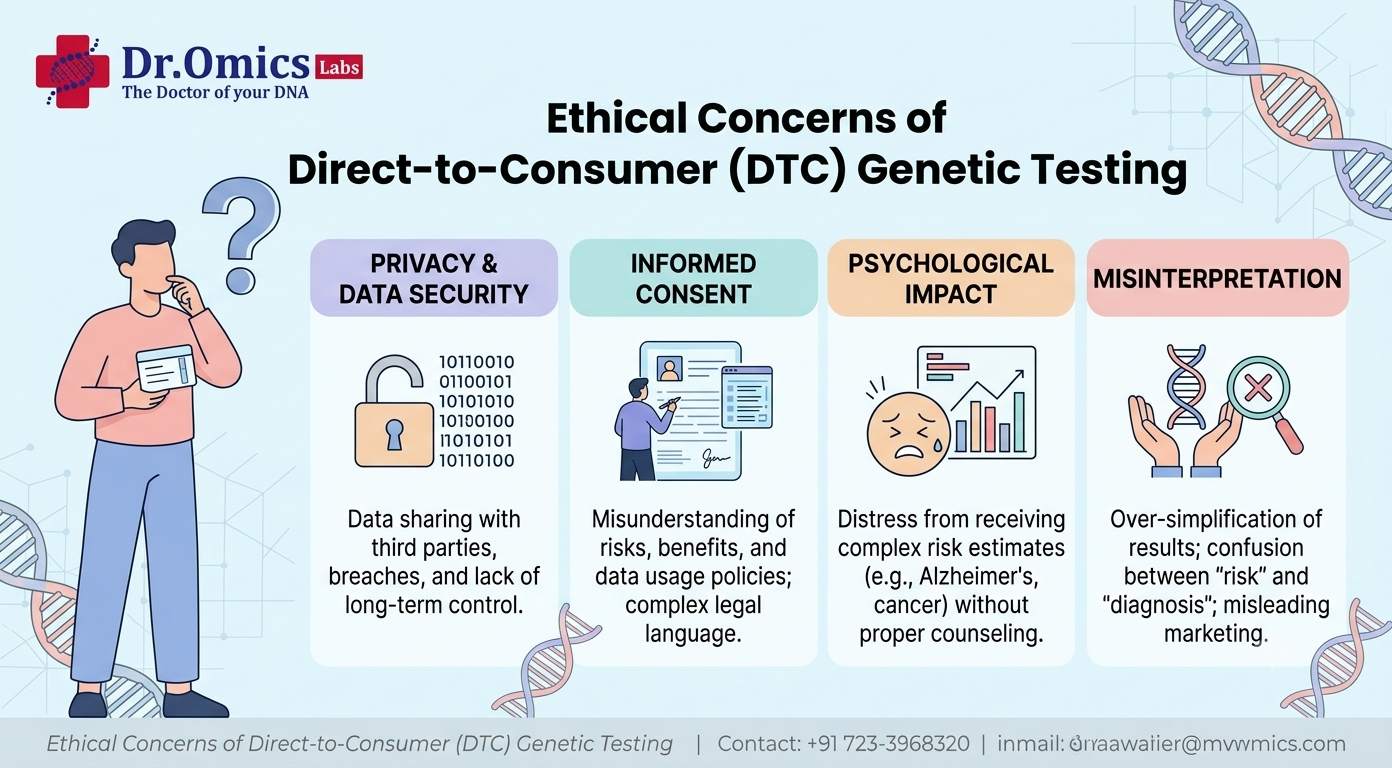
Privacy remains one of the most significant ethical issues. Consumers may unknowingly share highly sensitive genetic data with companies that store, analyze, or even share anonymized information for research or commercial purposes. This raises the question: is consumer genomics safe? Although many companies implement security measures, no database is entirely immune to cyber threats or data misuse.
Another important issue is unexpected family discoveries. Can consumer genomics reveal family secrets? The answer is yes. DNA testing has uncovered unknown siblings, misattributed parentage, donor conception, and adoption histories. Such findings can create emotional distress and complex family situations that users may not anticipate before testing.
Many buyers also ask what DTC DNA tests cover. Coverage varies widely between companies, making it essential to understand exactly what is included before purchasing. This is one reason to consider before buying a DNA kit has become an important question. Consumers should review privacy policies, testing scope, laboratory certifications, scientific evidence, and data-sharing practices before making a decision.
Another common misconception involves hair-based testing. Many wonder what hair DNA analysis used for or can hair DNA tests show deficiencies. Hair DNA testing is generally not a validated method for diagnosing nutritional deficiencies. Most deficiency assessments require blood testing, while hair analysis is primarily used in certain toxicology or environmental exposure assessments rather than genetic diagnosis.
Similarly, people frequently ask are heart DNA test kits accurate. While some tests identify genetic variants associated with cardiovascular conditions, they cannot definitively predict heart disease because lifestyle, environment, and family history also play major roles. This highlights what is the difference between clinical and consumer DNA tests. Clinical genetic testing is ordered by healthcare professionals, follows stricter quality standards, and is interpreted within a medical context, whereas consumer tests are intended primarily for informational use.
This is exactly why genetic counseling is important for DTC testing. A qualified genetic counselor helps individuals understand complex reports, explains how to interpret consumer DNA results, and prevents unnecessary anxiety caused by misunderstood risk estimates. They can also advise whether additional clinical testing is appropriate.
Finally, what are risks of consumer genetic testing include privacy concerns, psychological stress, false reassurance, and misinterpretation of results. While can DTC test guide lifestyle changes? They may encourage healthier habits, but lifestyle decisions should be based on comprehensive medical evaluation rather than DNA reports alone. Understanding what are limitations of at home DNA tests is essential for making informed choices.
As the DTC genetic testing market grow, ethical discussions surrounding privacy, informed consent, data ownership, and responsible interpretation will become increasingly important. Direct-to-consumer genetic testing offers exciting opportunities, but informed consumers should balance curiosity with caution to ensure these powerful tools are used responsibly.

