
Have you ever wondered why two people living in the same house, eating the exact same food, can react so differently to a seasonal flu? While one bounces back in twenty-four hours, the other might spend a week in bed. The secret often lies beneath the surface—hidden within your cellular instruction manual.
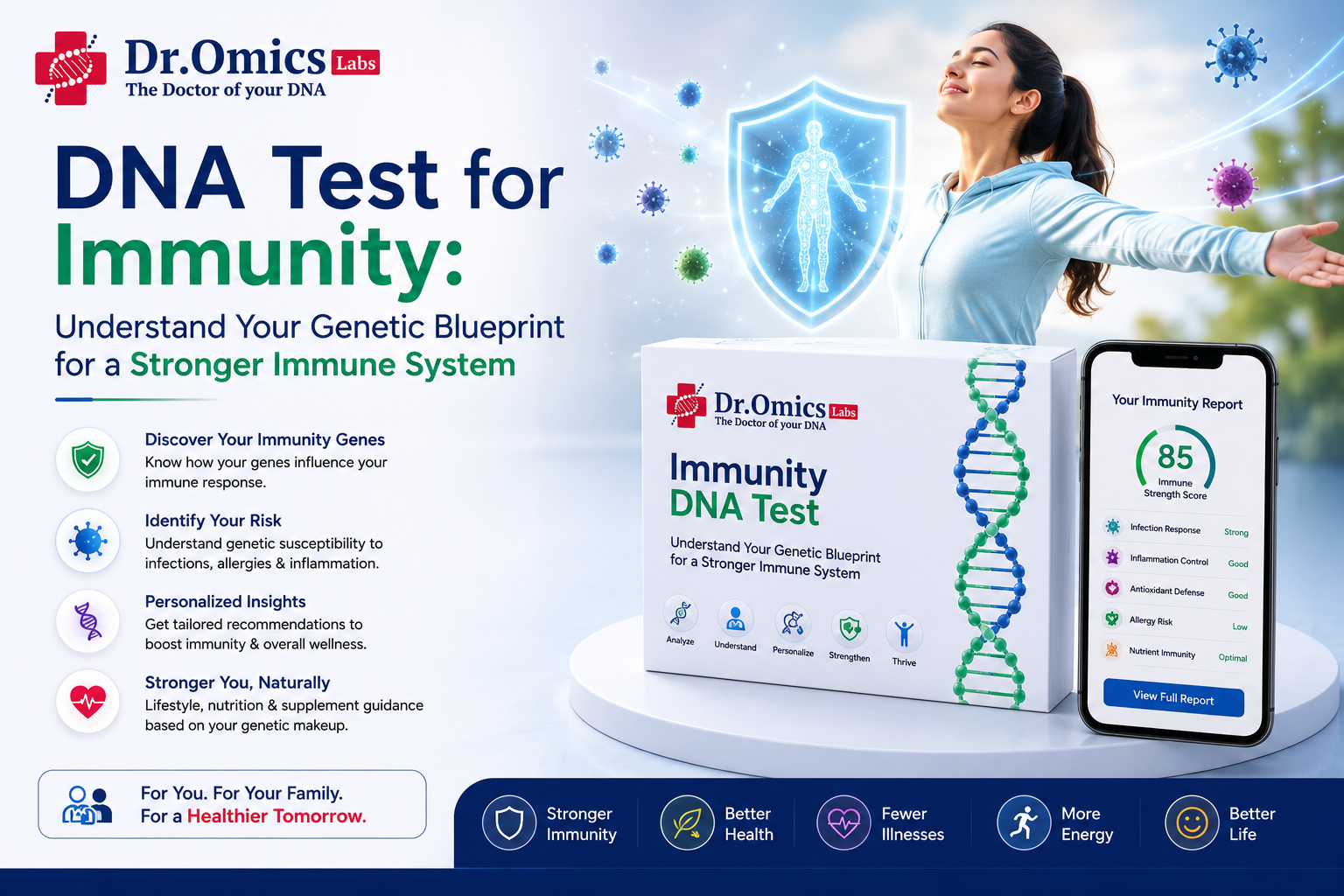
In India, a growing paradigm shift toward personalized preventive healthcare has brought advanced genomics to our doorsteps. Instead of relying purely on generalized lifestyle checklists, individuals are turning to a specialized DNA test for immunity India to uncover their baseline defenses. Your genetic code dictates how your body recognizes, fights, and remembers pathogens. By decoding this blueprint, you gain actionable insights into building a highly individualized shield for your long-term health.
The Core Science: Immune System Genetics
The human immune framework is a beautifully complex web of cellular communication, and immune system genetics sit at the absolute center of it. Every time your body encounters an environmental threat—whether it is a common cold virus or a bacterial infection—specific genes activate to coordinate your biological defense.
When you undergo a genetic immune health test, scientists analyze tiny variations in your DNA called Single Nucleotide Polymorphisms (SNPs). These microscopic structural variations explain why your innate and adaptive immune responses are unique to you. In particular, immunity genomics India focus heavily on how regional dietary baselines, lifestyle pressures, and ancestral backgrounds interact with these specific genetic markers to influence overall vitality.
LMDX Components of Your Genetic Shield
An advanced DNA based immunity profile generally segments your genetic results into distinct, actionable categories. Understanding these layers helps you see exactly how your body processes threats and handles inflammation.
1. Innate Immunity DNA (Your First Line of Defense)
Your innate immune system is the physical and chemical barrier that responds immediately to foreign invaders.
- The Mechanism: Your innate immunity DNA controls the initial alarm system—specifically how fast your macrophages (cell-devouring white blood cells) and natural killer cells recognize a threat.
- The Genetic Variance: Certain individuals possess specific gene variations that make their first line of defense exceptionally rapid, while others may experience a slight lag, making them more reliant on secondary, adaptive defenses.
2. Adaptive Immune Response and Cytokine Signaling
Once the initial barrier is breached, your adaptive immune system takes over to create targeted antibodies. This phase relies entirely on an intricate communication pathway driven by your immune response gene test markers.
- Cytokine Pathways: Cytokines are tiny signaling proteins that tell your immune cells where to go and how aggressively to fight.
- The Genetic Pivot: Variations in cytokine genes can lead to either an under-response (sluggish recovery) or an over-response (excessive, tissue-damaging inflammation).
3. Autoimmune Genetic Risk India
A crucial aspect of mapping your genetic blueprint is ensuring your defense mechanism does not accidentally target your own body.
The Delicate Balance: A highly sensitive immune system can sometimes struggle to differentiate between foreign pathogens and your body’s healthy tissues.
Testing for autoimmune genetic risk India looks directly at the Human Leukocyte Antigen (HLA) gene complex. Certain variations within the HLA complex are strongly linked to an increased statistical probability of developing autoimmune conditions like rheumatoid arthritis, celiac disease, or vitiligo. Knowing this vulnerability early allows for proactive lifestyle tracking before clinical symptoms surface.
Comparative View: Standard vs. DNA-Based Immunity Profiles
| Attribute | Standard Lifestyle Approach | DNA-Based Immunity Profile |
| Primary Basis | General population guidelines and basic blood work. | Personal genomic mapping via saliva or cheek swab. |
| Innate System Insight | Evaluates current white blood cell counts only. | Uncovers underlying efficiency of your innate immunity DNA. |
| Inflammatory Tracking | Measures temporary markers like C-reactive protein (CRP). | Identifies long-term genetic predispositions to cellular inflammation. |
| Actionable Outcome | Universal advice (e.g., “take generic multivitamins”). | Hyper-targeted micronutrient and lifestyle adjustments. |
Transforming Blueprint Data into Daily Action
Possessing genetic data is only half the battle; the true power of an immune response gene test lies in its functional execution. Once your profile highlights potential gaps—such as an altered ability to synthesize Vitamin D3 naturally or a heightened tendency toward systemic inflammation—you can adapt your environmental factors to compensate for your biology.
- Precision Nutrition: If your genomic panel reveals that your cells lack optimal receptors for crucial immune-modulating nutrients (like Zinc, Vitamin A, or Selenium), your dietary focus shifts from basic healthy eating to targeted, highly bioavailable food choices.
- Tailored Stress and Recovery Frameworks: Chronic psychological stress releases cortisol, which systematically dampens your innate immune functions. If your profile shows an elevated baseline sensitivity to inflammatory cytokines, managing rest and sleep becomes a non-negotiable medical pillar rather than a casual luxury.
- Informed Clinical Screening: Identifying an underlying autoimmune genetic risk India empowers your physician to run highly specific, routine screenings, catching micro-level physiological shifts years before they manifest into chronic health challenges.

