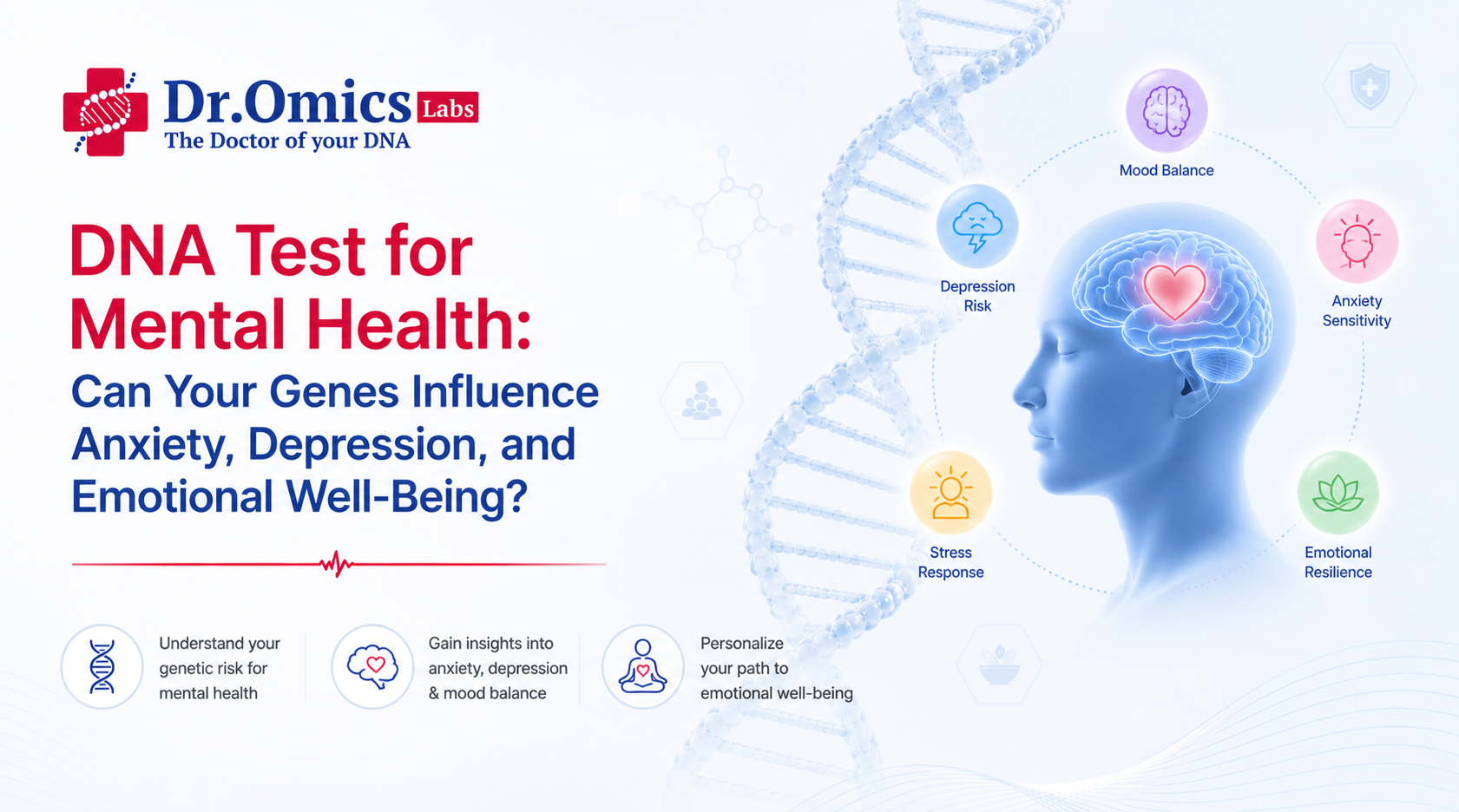
For decades, conversations surrounding mental health have centered on environment, trauma, stress, and lifestyle. While these factors are undeniably critical, an invisible script written deep inside our cells also influences how we process the world: our DNA.
With modern advancements in mental health genomics, science is pulling back the curtain on how our unique genetic makeup affects our emotional resilience. Today, a simple saliva or cheek-swab DNA test for mental health in India can offer unprecedented insights into your brain chemistry, helping to answer a fundamental question: Can your genes influence anxiety, depression, and overall emotional well-being?
The Genetic Blueprint of the Mind
No single gene acts as a simple “on/off” switch for mental health conditions. Instead, conditions like anxiety and depression are polygenic, meaning they are influenced by thousands of tiny variations across our DNA interacting with our life experiences.
When you look into anxiety genetics in India, or search for a depression gene test, what scientists are actually mapping out are specific genetic markers that dictate how your brain builds, transports, and processes crucial chemical messengers known as neurotransmitters.
Neurotransmitters and the DNA Connection
Your brain relies on a delicate balance of neurotransmitters to regulate mood, sleep, focus, and your fight-or-flight response. Your genes contain the exact instructions for manufacturing these chemicals. A neurotransmitter DNA test evaluates key pathways to determine if your genetic coding leans toward chemical imbalances.
1. The Serotonin System (The Mood Stabilizer)
Serotonin is the chemical champion of emotional stability. The SLC6A4 gene, often referred to as the serotonin transporter gene, plays a massive role in how efficiently serotonin is recycled in your brain. Variations in this gene—frequently looked at during a targeted serotonin gene test—can make an individual more vulnerable to mood dips, chronic stress, and clinical depression under challenging life circumstances.
2. Dopamine and Norepinephrine (Motivation & Stress Response)
The COMT gene regulates an enzyme that breaks down dopamine in the prefrontal cortex.
- Some people possess a variation that breaks down dopamine quickly, leaving them cool under pressure but prone to needing higher stimulation to focus.
- Others possess a variation that keeps dopamine high; they are brilliant thinkers but can easily become overwhelmed or hyper-anxious when stress hits.
Knowing where you sit on this spectrum helps reframe your stress response as a biological trait rather than a personal failure.
3. The MTHFR Gene (The Cellular Engine)
The MTHFR gene instructs your body on how to convert folate (Vitamin B9) into its active form, methylfolate. This active form is foundational for synthesizing serotonin, dopamine, and norepinephrine. A common variant in this gene reduces this conversion efficiency, which has been linked to a higher genetic mental health risk in India, where nutritional deficiencies can compound the issue.
Beyond Risk: The Power of Pharmacogenomics
Discovering a predisposition to a condition is only half the story. The true clinical breakthrough of psychiatric genetic testing in India lies in a specialized field called pharmacogenomics (PGx)—the study of how your genes affect your response to medications.
If you or a loved one have ever navigated mental health struggles, you know the grueling “trial-and-error” phase all too well. Finding the right antidepressant or anti-anxiety medication can take months, sometimes involving frustrating side effects and treatment failures.
[Patient DNA Sample]
│
▼
[Laboratory Sequencing]
│
▼
┌───────────────────────────────┐
│ Pharmacogenomics (PGx) Report │
├───────────────────────────────┤
│ 🟢 Fast Metabolizer │ ──> Higher dose needed
│ 🟡 Normal Metabolizer │ ──> Standard dosing
│ 🔴 Slow Metabolizer │ ──> High risk of side effects
└───────────────────────────────┘
A psychiatric DNA panel analyzes liver enzymes (such as the CYP450 superfamily) responsible for breaking down psychiatric drugs. If your DNA reveals you are a “slow metabolizer” of a specific compound, that drug will build up in your system, causing intense side effects. If you are an “ultra-rapid metabolizer,” your body clears the drug so quickly it never has a chance to work.
What a Mental Health DNA Test Can and Cannot Do
To maintain a healthy perspective on your mental wellness journey, it is vital to understand the boundaries of genomic science.
| What the Test Can Do | What the Test Cannot Do |
| Identify genetic predispositions to anxiety, depression, and stress intolerance. | Provide a definitive clinical diagnosis (e.g., “You have clinical depression”). |
| Highlight altered neurotransmitter pathways (Serotonin, Dopamine). | Predict exactly when or if a mental health episode will occur. |
| Guide doctors toward medications less likely to cause adverse side effects. | Serve as a replacement for comprehensive therapy or lifestyle interventions. |
The Indian Landscape: Breaking Stigmas with Science
In India, mental health has historically been shrouded in silence and stigma. For generations, struggles with anxiety or low mood were misattributed to weakness of character or lack of willpower.
The rise of accessible genomic testing is fundamentally reshaping this narrative. By demonstrating that a vulnerability to anxiety or depression can have a tangible, biological blueprint—much like diabetes or hypertension—genomics bridges the gap between mental and physical health care. It legitimizes the struggle, encourages early intervention, and empowers individuals to seek help without shame.
A Tool for Proactive Well-Being
Your DNA is not your destiny; it is an informational roadmap. Knowing your genetic liabilities allows you to make precise, targeted lifestyle shifts. If your genetic profile points to an altered serotonin pathway or poor folate methylation, you can proactively adapt your nutrition, prioritize specific mindfulness practices, and choose therapies that work in harmony with your biology.
Ultimately, a DNA test for mental health does not box you into a diagnosis. Instead, it grants you the ultimate clarity to stop guessing, stop feeling guilty, and start healing with precision science on your side.
Disclaimer: Genetic testing should be used as a supportive tool alongside clinical evaluations. Always consult a qualified psychiatrist, psychologist, or genetic counselor to interpret your results and design an appropriate wellness or treatment plan.