
Neurodevelopmental disorders (NDDs)—conditions that impact how the brain develops and functions, affecting learning, behavior, communication, and movement—often leave families searching for answers. As the field of neurogenomics evolves, genetic testing has become a crucial tool in this pursuit, yet its utility and accuracy are subjects of ongoing scientific exploration.
Understanding Diagnostic Accuracy and Yield
When asking how accurate are neuro genetic tests, it is essential to understand “diagnostic yield”—the percentage of tests that provide a confirmed molecular cause for a condition. Currently, genetic testing for NDDs is not a one-size-fits-all solution, and results can vary significantly based on the testing modality.
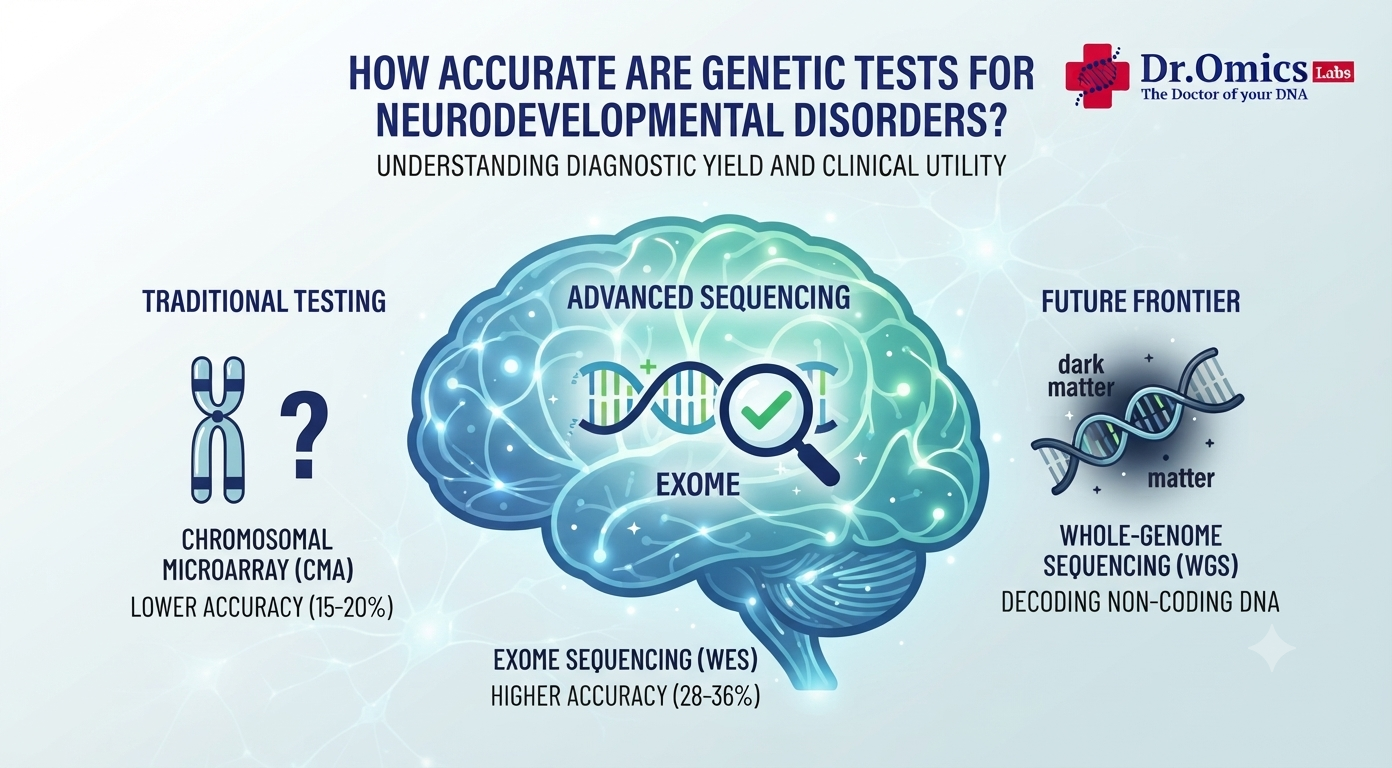
- Microarray Testing: Traditionally a first-tier test, chromosomal microarray (CMA) identifies large deletions or duplications in DNA. While it has been the standard for over a decade, its resolution is limited, often resulting in lower diagnostic yields (around 15–20%) compared to newer sequencing technologies.
- Exome Sequencing (WES): Considered a modern first-tier clinical test, exome sequencing analyzes the protein-coding regions of thousands of genes. Research indicates this approach offers a higher diagnostic yield, often ranging from 28% to 36% for various NDDs.
- Whole-Genome Sequencing (WGS): This is the most comprehensive method, capturing both coding and non-coding DNA. Recent breakthroughs have highlighted the importance of this “DNA dark matter,” with studies identifying rare non-coding genes like RNU4-2 as significant causes of previously undiagnosed NDD cases.
Why Results Vary
It is important to note that a negative result does not always mean there is no genetic cause. Limitations include:
- Variants of Uncertain Significance (VUS): Geneticists frequently encounter changes in DNA that are not yet well understood, making them difficult to link definitively to a specific disorder.
- Genetic Heterogeneity: Because NDDs are complex, thousands of different genes can contribute to similar symptoms, meaning a test must be specifically tailored to the suspected phenotype to be most effective.
- De Novo Mutations: Many pathogenic variants arise spontaneously in the individual rather than being inherited, which can complicate family testing and require advanced screening methods.
The Role of Neurogenomics in Clinical Care
Genetic testing does more than provide a label; it guides personalized care. By identifying key neurological genetic markers, clinicians can match patients with targeted therapies, inform lifestyle adjustments—such as temperature regulation for specific epilepsy syndromes—and provide anticipatory guidance for associated comorbidities like GI or hormonal issues.
Furthermore, latest breakthroughs in neurogenomics, such as CRISPR-based screens and “essentiality maps” of brain development, are rapidly expanding our list of actionable genes. These advancements are helping researchers understand how gene regulation—the process of turning genes “on” or “off”—impacts brain health, offering new hope for future precision treatments.
Interpreting Your Results
How to interpret neuro genetic results is a process that should always involve a medical geneticist or genetic counselor. Because testing is evolving, a result that was “inconclusive” a few years ago might yield new information upon reanalysis as scientific databases grow.
Conclusion
Genetic testing for neurodevelopmental disorders has transitioned from a diagnostic luxury to a vital clinical resource. While these tests are highly accurate when a specific pathogenic variant is identified, they are not yet capable of explaining every case, with diagnostic yields typically falling between 25% and 50%. Nevertheless, the power of these tests lies in their ability to end the “diagnostic odyssey” for many families, provide actionable management plans, and foster a deeper understanding of the complex genetic architecture of the human brain. As we continue to decode the non-coding genome, the precision and utility of these screenings will only continue to improve, turning genetic insights into better clinical outcomes.

