
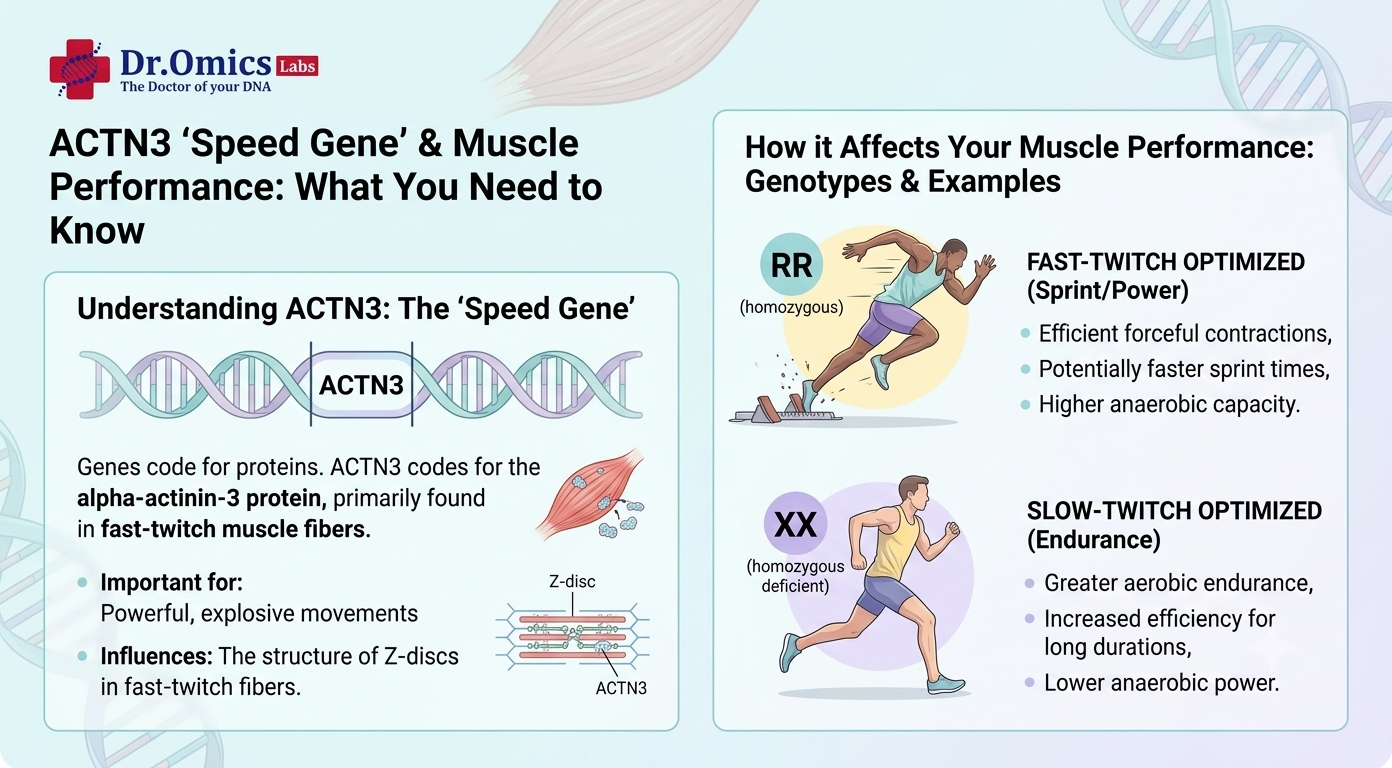
Athletic ability is shaped by consistent training, nutrition, recovery, and genetics. While hard work remains the biggest driver of success, many people wonder: can DNA improve athletic performance? The answer is that DNA cannot replace training, but it can help you understand your body’s natural strengths and limitations. One of the most researched genetic markers in sports science is the ACTN3 gene, often referred to as the “speed gene.”
What Is ACTN3 Speed Gene?
If you’ve ever asked, what is ACTN3 speed gene, it refers to a gene responsible for producing a protein called alpha-actinin-3. This protein is found primarily in fast-twitch muscle fibers, which generate explosive power for activities like sprinting, jumping, and weightlifting.
Some people inherit a version of ACTN3 that produces this protein, while others inherit a variant that does not. Interestingly, lacking the protein does not indicate poor health—it simply influences how muscles perform during different types of exercise.
Can DNA Show Fast Twitch Muscle Fibers?
One common question is, can DNA show fast twitch muscle fibers? While a DNA test cannot directly measure muscle fiber composition, it can identify ACTN3 variants associated with a greater likelihood of fast-twitch or endurance-oriented muscle characteristics.
This information may help athletes understand whether they are naturally inclined toward explosive sports or endurance activities.
How Does Genetics Affect Muscle Growth?
Many people ask, how does genetics affect muscle growth and what genes affect strength training. ACTN3 is only one piece of the puzzle. Other genes influence muscle repair, protein synthesis, inflammation, and recovery. Together, these genetic factors affect how efficiently your body builds strength and adapts to resistance training.
However, genetics provides potential—not guaranteed results. Training quality and consistency remain the most important factors.
What Genetic Markers Predict Endurance?
Besides ACTN3, researchers study several genetic markers linked to endurance performance. Questions like what genetic markers predict endurance and what is VO2max genetics relate to genes involved in oxygen transport, cardiovascular efficiency, and aerobic capacity.
Although genetics may influence VO2max potential, endurance performance still depends heavily on structured training, nutrition, and recovery.
Does Genetics Determine Ideal Workout?
Many athletes wonder, does genetics determine ideal workout or can DNA test show exercise response. Genetic insights may suggest whether your body responds better to strength-focused or endurance-focused training, but they should guide—not replace—a well-designed fitness program.
Learning how to optimize training with DNA allows athletes to personalize training intensity, recovery periods, and exercise selection based on their individual tendencies.
Can DNA Test Prevent Sports Injuries?
Another growing area of research focuses on injury prevention. Many athletes ask, can DNA test prevent sports injuries or can DNA predict ACL injury risk. Certain genes are associated with collagen production, tendon strength, inflammation, and tissue repair, potentially identifying individuals with a higher predisposition to specific injuries.
Although DNA cannot predict injuries with certainty, combining genetic information with proper coaching and biomechanics can support how to use DNA for injury prevention more effectively.
How Does Genetics Affect Recovery Time?
Recovery varies greatly between individuals. Research exploring how does genetics affect recovery time suggests that genes involved in inflammation and muscle repair may influence how quickly someone recovers after intense exercise. This knowledge can help athletes plan training loads more efficiently.
Why Athletes Take DNA Tests
Elite and recreational athletes increasingly explore genetic testing to personalize training. Why athletes take DNA tests often comes down to understanding performance potential, nutrition needs, injury susceptibility, and recovery strategies. Many also ask, what is the best DNA test for athletes and is sports DNA testing accurate. While reputable DNA tests can identify validated genetic variants, they provide probabilities rather than guarantees.
Finally, sports genetics also plays a role in fair competition. Scientists continue researching what is genetic doping detection to identify illegal genetic modifications that could enhance athletic performance.
Ultimately, how much of performance is genetic remains an ongoing scientific debate. Genetics influences athletic potential, but dedication, coaching, nutrition, sleep, and consistent training have a much greater impact on long-term success. DNA testing is best viewed as a personalized tool that complements—not replaces—smart training and disciplined effort.

