
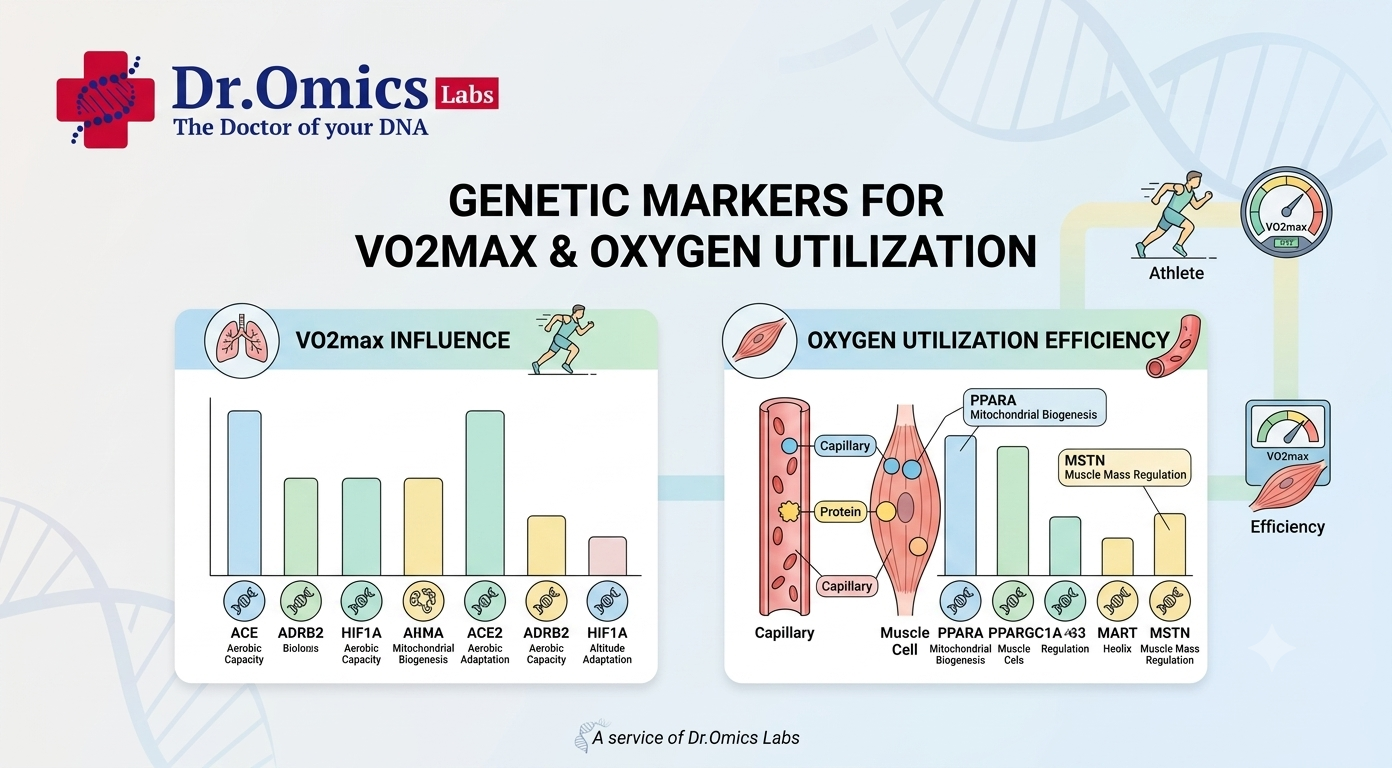
Have you ever wondered why some people naturally excel at endurance sports while others perform better in short, explosive activities? The answer lies partly in your DNA. Understanding what genetic markers affect my VO2max and oxygen utilization can help athletes and fitness enthusiasts unlock their full potential. Today, advanced genetic testing makes it possible to understand how your body responds to exercise and create a training plan tailored to your unique biology.
How Genetics Influence VO2max
VO2max measures the maximum amount of oxygen your body can use during intense exercise. While training significantly improves VO2max, genetics account for nearly 40–60% of your natural aerobic capacity. This is why can DNA improve athletic performance has become one of the most searched questions among athletes.
Several genetic markers are associated with endurance and oxygen efficiency. Variants in genes such as ACE, PPARGC1A, NOS3, and VEGFA influence cardiovascular performance, oxygen delivery, mitochondrial function, and blood vessel formation. These are some of the genetic markers predict endurance and help explain what is VO2max genetics.
More Than Just Endurance
DNA testing goes beyond endurance. Many athletes ask what is ACTN3 speed gene because ACTN3 is linked to fast-twitch muscle fibers responsible for sprinting and explosive power. It also answers questions like can DNA show fast twitch muscle fibers, how does genetics affect muscle growth, and what genes affect strength training.
Your genetic profile can also indicate does genetics determine ideal workout by revealing whether your body responds better to endurance training, resistance training, or high-intensity interval workouts. This helps athletes understand how to optimize training with DNA instead of relying on trial and error.
Recovery and Injury Prevention
Recovery is another area where genetics plays a crucial role. Variations in genes related to inflammation, collagen production, and muscle repair explain how does genetics affect recovery time. These insights allow athletes to adjust recovery periods and avoid overtraining.
Sports DNA reports may also reveal can DNA test prevent sports injuries, including can DNA predict ACL injury risk by analyzing genes associated with ligament strength and connective tissue health. Understanding these markers helps coaches and athletes implement better conditioning and injury prevention strategies.
Accuracy of Sports DNA Testing
A common question is is sports DNA testing accurate. While DNA cannot predict future champions, it provides scientifically supported insights into how your body is likely to respond to different training methods. The best DNA test for athletes combines genetic information with fitness assessments, nutrition, recovery tracking, and performance data for a comprehensive picture.
Many elite competitors also use genetic insights to understand how much of performance is genetic, does DNA affect flexibility, and can DNA test show exercise response. Additionally, anti-doping agencies study what is genetic doping detection to identify potential misuse of gene-editing technologies in competitive sports.
Unlock Your Athletic Potential
Every athlete is unique. Your DNA cannot replace dedication, discipline, or proper coaching, but it can provide a roadmap for smarter training. Whether you’re curious about why athletes take DNA tests, seeking to improve endurance, optimize recovery, or reduce injury risk, genetic testing offers personalized insights that support better performance and long-term health.
By understanding the genes behind VO2max, oxygen utilization, muscle composition, and recovery, you can make informed training decisions and maximize your athletic potential with precision.

