
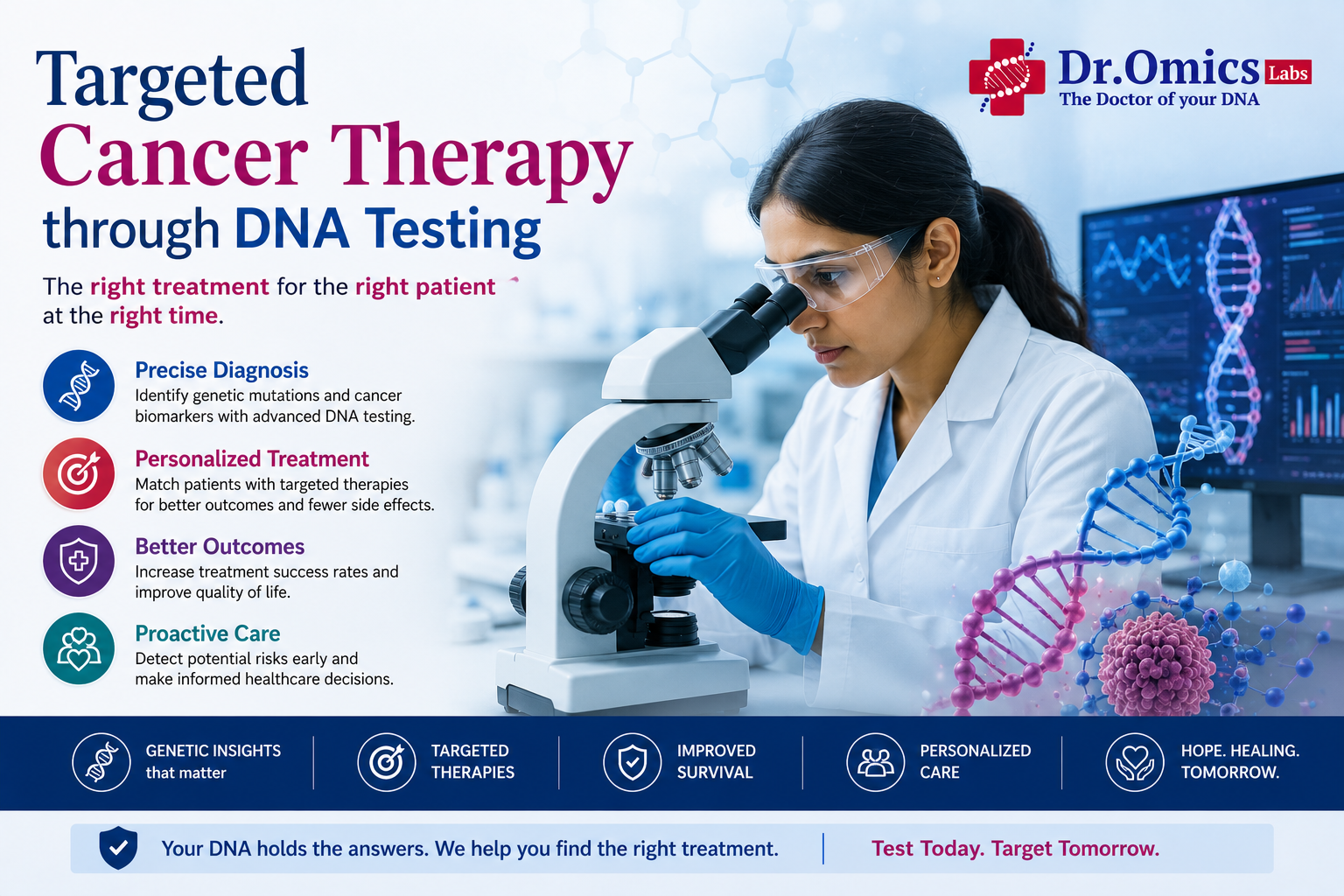
In the very recent past, a cancer diagnosis often meant a “one-size-fits-all” approach. Patients with the same type of cancer were usually given the same chemotherapy, regardless of how their individual bodies might react. However, as we move through 2026, the medical landscape has fundamentally shifted. We are now firmly in the era of onco precision medicine, where the focus has moved from treating the “cancer” to treating the specific “patient.”
At the heart of this revolution is genomic cancer testing. By decoding the unique genetic blueprint of a tumor, doctors can now bypass the trial-and-error phase of oncology and move straight to targeted cancer therapy.
Understanding the Blueprint: What is Genomic Cancer Testing?
Every tumor has a unique “signature”—a set of genetic mutations that tell it how to grow, hide from the immune system, and resist treatment. A cancer DNA test (also known as molecular profiling or genomic sequencing) involves taking a small sample of the tumor or a “liquid biopsy” (a blood test) to identify these mutations.
There are two main types of genetic variations that oncologists look for:
- Somatic Mutations: These are changes that occur only within the cancer cells themselves. They aren’t inherited and aren’t found in your healthy tissue.
- Germline Mutations: These are inherited genetic changes present in every cell of your body (like the well-known BRCA1/2 mutations). These help determine your risk and guide family screening.
By mapping these variations, personalized oncology allows doctors to see exactly which “engine” is driving the cancer’s growth, enabling them to choose a drug specifically designed to shut that engine down.
Targeted Cancer Therapy: Accuracy Over Aggression
Unlike traditional chemotherapy, which attacks all rapidly dividing cells (including healthy ones in your hair and gut), targeted cancer therapy is designed to recognize and attack specific molecules on or inside cancer cells.
Why this matters: Targeted therapies are often more effective and typically result in fewer debilitating side effects. They don’t just “bomb” the area; they act like a “smart missile” directed at the tumor’s specific vulnerability.
In 2026, the range of available targeted therapies has expanded significantly. We now have:
- Small Molecule Drugs: These are small enough to enter cancer cells and interfere with the internal signaling that tells the cell to multiply.
- Monoclonal Antibodies: These attach to the outside of cancer cells, either marking them for the immune system to find or blocking the receptors that the cancer uses to “feed” on growth signals.
Pharmacogenomics Oncology: Your DNA and Drug Response
One of the most exciting subfields of precision medicine is pharmacogenomics oncology. This is the study of how your inherited genes affect your body’s response to medications.
Not everyone metabolizes drugs at the same rate. Some people are “ultra-rapid metabolizers,” meaning they might process a drug so quickly it never reaches a therapeutic level. Others are “slow metabolizers,” putting them at high risk for severe toxicity because the drug stays in their system too long.
By using pharmacogenomic testing, your oncology team can:
- Calculate Precise Dosages: Avoiding the “standard dose” that might be too much or too little for your specific biology.
- Predict Side Effects: Identifying if you are genetically predisposed to rare but serious adverse reactions to specific chemotherapies or immunotherapies.
- Choose the Right Class of Drug: Determining if a specific immunotherapy like a PD-1 inhibitor is likely to be effective before you ever start the first infusion.
The Path to Personalized Prevention and Care
The shift toward onco precision medicine isn’t just about treating advanced stages of the disease; it’s about changing the trajectory of care from the moment of diagnosis. As genomic testing becomes more routine and reimbursement hurdles decrease, it is becoming a standard part of the patient journey.
For patients and their families, the benefits are clear:
- Increased Survival Rates: Targeted treatments are rewriting survival curves for cancers previously thought to be untreatable, such as certain types of metastatic melanoma and lung cancer.
- Better Quality of Life: By reducing unnecessary treatments and minimizing toxicity, patients can maintain a higher level of daily function during their journey.
- Access to Clinical Trials: Genomic testing often reveals rare mutations that make a patient a perfect candidate for cutting-edge clinical trials, offering hope when standard options are exhausted.
Conclusion: A New Standard of Hope
The future of cancer care is no longer a distant dream—it is here. Through the power of genomic cancer testing and the precision of targeted cancer therapy, we are dismantling the “average” treatment model in favor of one that respects the biological individuality of every patient.
If you or a loved one are facing a diagnosis, ask your medical team about a cancer DNA test. In the world of 2026, your genetics aren’t just a part of the problem—they are the key to the solution.