
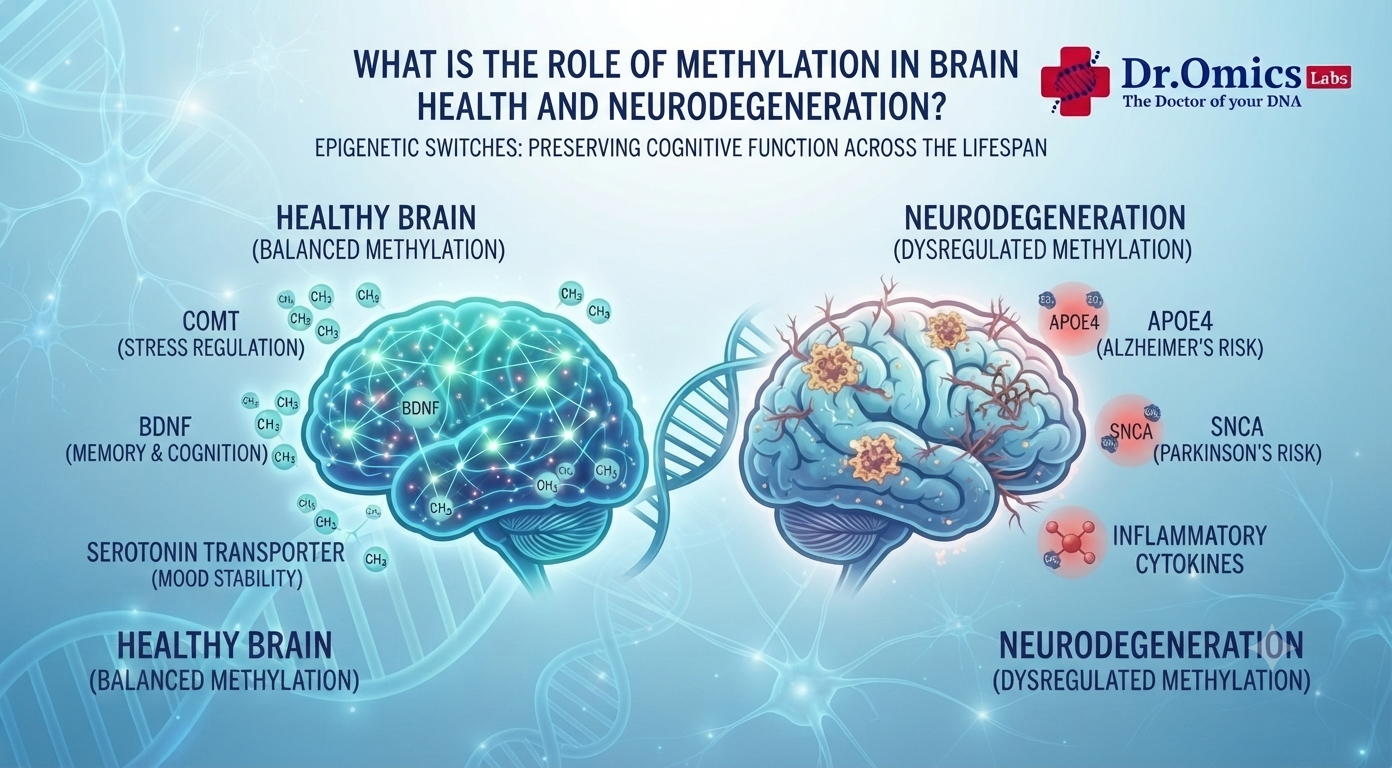
In the quest to understand the brain’s resilience against aging and disease, researchers are increasingly looking beyond the static sequence of our DNA. While our genetic code provides the blueprint, it is the chemical modifications—the “epigenetic” marks—that dictate how those genes are expressed. Among these, methylation in brain health has emerged as a cornerstone mechanism, acting as a dynamic switch that influences memory, mood, and the susceptibility to neurodegeneration.
The Mechanism: Methylation as a Genetic Regulator
Methylation involves the addition of a methyl group to DNA, typically acting to silence or “turn off” specific genes. In the brain, this process is essential for learning and memory. What genes affect memory and cognition? Many of the genes involved in synaptic plasticity—the ability of neurons to form new connections—are regulated by methylation. When this regulatory system falters, cognitive processes can become disrupted, highlighting how do genetics affect cognitive decline.
Beyond basic memory, methylation plays a vital role in how does DNA affect neurotransmitter processing. For instance, the COMT gene for brain health is heavily influenced by epigenetic regulation. This gene is responsible for breaking down dopamine in the prefrontal cortex. Efficient methylation-related regulation of COMT is what determines how you handle stress, impacting how to use genetics for stress management and how does genetics influence depression risk.
Methylation and Neurodegeneration
The link between methylation and neurodegenerative disease is a primary focus of what are latest breakthroughs in neurogenomics. Research suggests that as we age, our “epigenetic clock” can become dysregulated, leading to aberrant methylation patterns.
- Alzheimer’s Disease: Can DNA predict Alzheimer’s risk? While genetic markers like APOE-ε4 are standard, newer studies suggest that altered methylation in genes associated with inflammatory pathways may be an early indicator of disease progression, offering a potential path for how can a DNA test guide dementia prevention.
- Parkinson’s Disease: Similarly, can DNA show Parkinson’s disease risk? Studies have identified specific methylation signatures linked to the SNCA gene, which is involved in Parkinson’s pathology, potentially providing earlier diagnostic windows.
Navigating Neurogenomic Testing
Given these insights, many are asking: what is genetic testing for brain health and what neurological conditions can genetic testing detect? Modern screening now extends to key neurological genetic markers, including what are latest breakthroughs in neurogenomics related to neurodevelopmental disorders.
When patients consider these tools, the most frequent concerns are: is neuro genetic testing reliable and how accurate are neuro genetic tests? Clinical-grade neurogenetic testing is highly reliable for identifying high-penetrance mutations. However, interpreting epigenetic markers like methylation is more complex, as these change throughout a lifetime. How to interpret neuro genetic results is therefore a task that requires a specialist, such as a neurologist or genetic counselor, who can contextualize the data within your broader health profile.
Precision Medicine: The Future of Mental Health
One of the most immediate applications of these genetic insights is the integration of pharmacogenomics to guide psychiatric medication. By understanding how your individual genetic makeup—influenced by both sequence variants and methylation status—affects your metabolism of medications, physicians can move away from trial-and-error prescribing. This proves that a DNA test can indeed guide mental health treatment, ensuring that the psychiatric medication selected is compatible with your unique neurotransmitter processing pathways.
Conclusion
Methylation is not just a biological process; it is the interface between our genes and our environment, determining the health and longevity of our brains. From the regulation of the COMT gene to the complex patterns underlying neurodegeneration, epigenetic mechanisms are central to the latest breakthroughs in neurogenomics. While we are still refining our ability to use methylation signatures for early diagnosis, the current advancements in genetic screening already offer profound benefits in personalized medicine. By providing actionable data for dementia prevention, stress management, and psychiatric treatment, genetic testing is becoming an indispensable tool for preserving brain health across the lifespan. Always approach these tests as part of a comprehensive neurological evaluation, ensuring that your genetic data serves as a roadmap for personalized, proactive care.

