
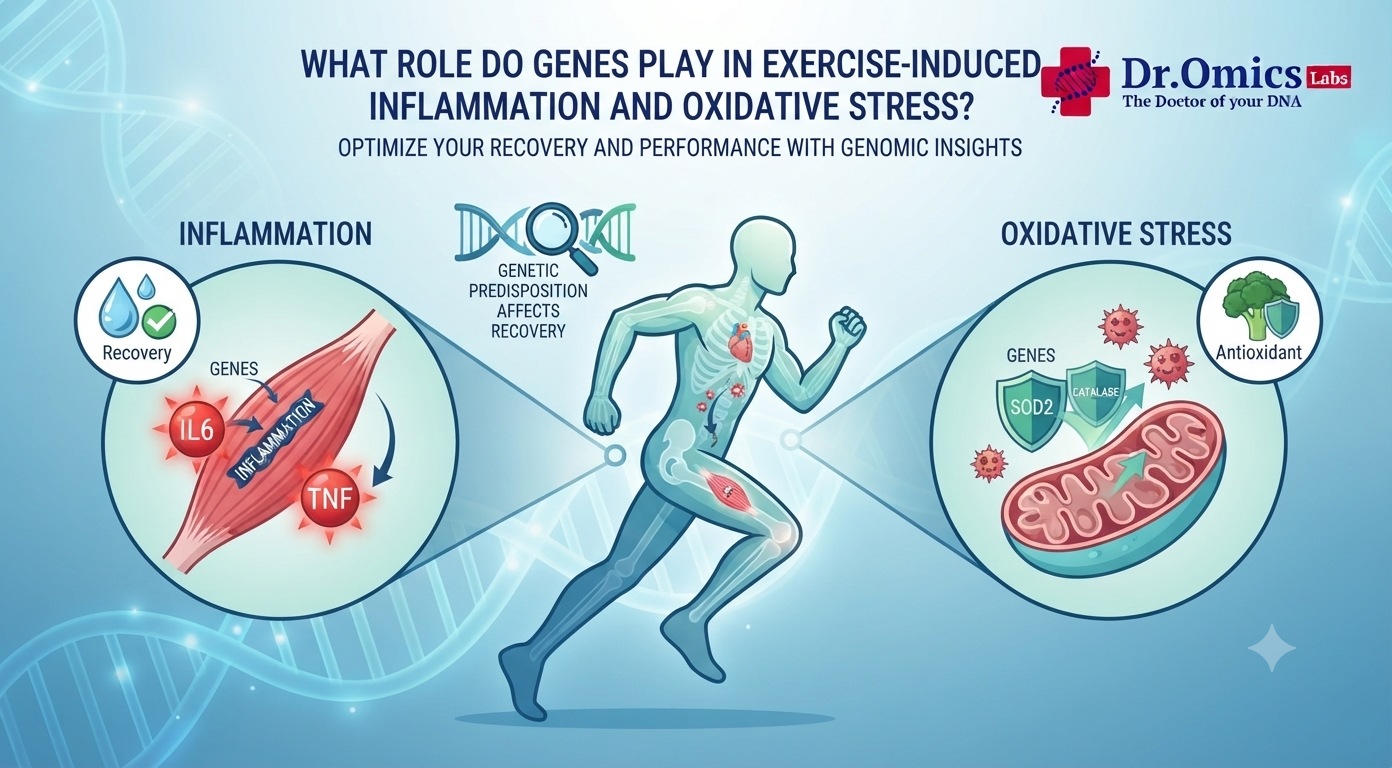
When you push your body to its limits in the gym, you are essentially creating controlled damage. The soreness and fatigue you feel afterward are the result of exercise-induced inflammation and oxidative stress. While these are necessary parts of the adaptation process—the “breakdown” that leads to growth—your genetic makeup dictates how your body manages this stress. Understanding the role of your DNA in these processes is critical for anyone wondering how to optimize fitness with DNA.
The Genetic Drivers of Inflammation
Not all bodies handle post-exercise inflammation the same way. What genes affect exercise inflammation? Key players include the IL6 (Interleukin-6) and TNF (Tumor Necrosis Factor) genes.
- IL6 acts as a double-edged sword; it is a pro-inflammatory cytokine during exercise that helps signal tissue repair, but genetic variants can cause it to remain elevated for too long. If you have “high-responder” variants, your body may struggle to shift from an inflammatory state to a recovery state, which often manifests as chronic fatigue or persistent muscle soreness.
- TNF variants can similarly influence the magnitude of your body’s inflammatory response, affecting how genetics affect muscle recovery.
If you are currently struggling to break through a fitness barrier, can Fit Genie explain fitness plateau? Yes, by revealing whether your genetic profile tends toward excessive post-workout inflammation, you can adjust your recovery protocols—such as increasing rest days or incorporating specific anti-inflammatory nutrition—to allow your body to adapt rather than just break down.
Oxidative Stress and DNA
Exercise increases the production of Reactive Oxygen Species (ROS), a natural byproduct of cellular energy production. While some ROS are needed for signaling, an imbalance leads to oxidative stress, which can damage muscle cells. Your genes, particularly those involved in your antioxidant defense system like SOD2 (Superoxide Dismutase 2), determine how effectively your body neutralizes these molecules. Individuals with variants that lower the efficiency of SOD2 may require higher levels of dietary antioxidants to manage the oxidative load of intense training.
Translating Genetics into Action
Understanding these markers is a cornerstone of precision fitness. When you combine DNA with fitness tests, you gain a comprehensive view of your physiological needs:
- Customizing Intensity: Does DNA determine HIIT vs cardio? If your genetic data shows a high inflammatory response, you might need to prioritize lower-impact, steady-state training over chronic high-intensity interval training (HIIT) to prevent burnout.
- Performance Markers: While does genetics determine strength potential is a complex question, markers like the ACTN3 gene for sprinters provide insights into whether your body is better suited for explosive power or endurance. This helps determine the best exercise based on DNA for your specific physiology.
- Oxygen Utilization: How does DNA affect oxygen utilization? Genes such as PPARGC1A influence mitochondrial biogenesis and aerobic efficiency. Knowing your status helps in how to use DNA for endurance training, allowing you to structure your aerobic base more effectively.
Are Genetic Fitness Tests Reliable?
As you explore these insights, it is common to ask: is the Fit Genie test reliable and are genetic fitness tests accurate? When processed through high-quality bioinformatics pipelines, these tests are highly reliable for identifying predisposition markers. They allow you to see your workout response at a molecular level, moving from generalized advice to data-backed decisions. By understanding your genetic factors, you can move toward a routine that helps you build muscle faster and stay injury-free.
Furthermore, remembering what genes affect joint health—such as COL1A1—can help you manage your overtraining risk, as these markers signal when your connective tissues need extra care.
Conclusion
Your genes are not a fixed limitation; they are a set of instructions that interact constantly with your environment. By understanding the genetic factors that influence exercise-induced inflammation and oxidative stress, you gain the power to manage your recovery as aggressively as you manage your training intensity. Whether you use your DNA profile to determine your ideal training split, adjust your nutritional intake, or simply realize when to schedule an extra rest day, these insights turn the “trial and error” of fitness into a refined, personalized journey. Ultimately, can DNA personalize my workout routine? Yes, by providing the biological evidence needed to train smarter, recover better, and sustain your progress for the long term.

