
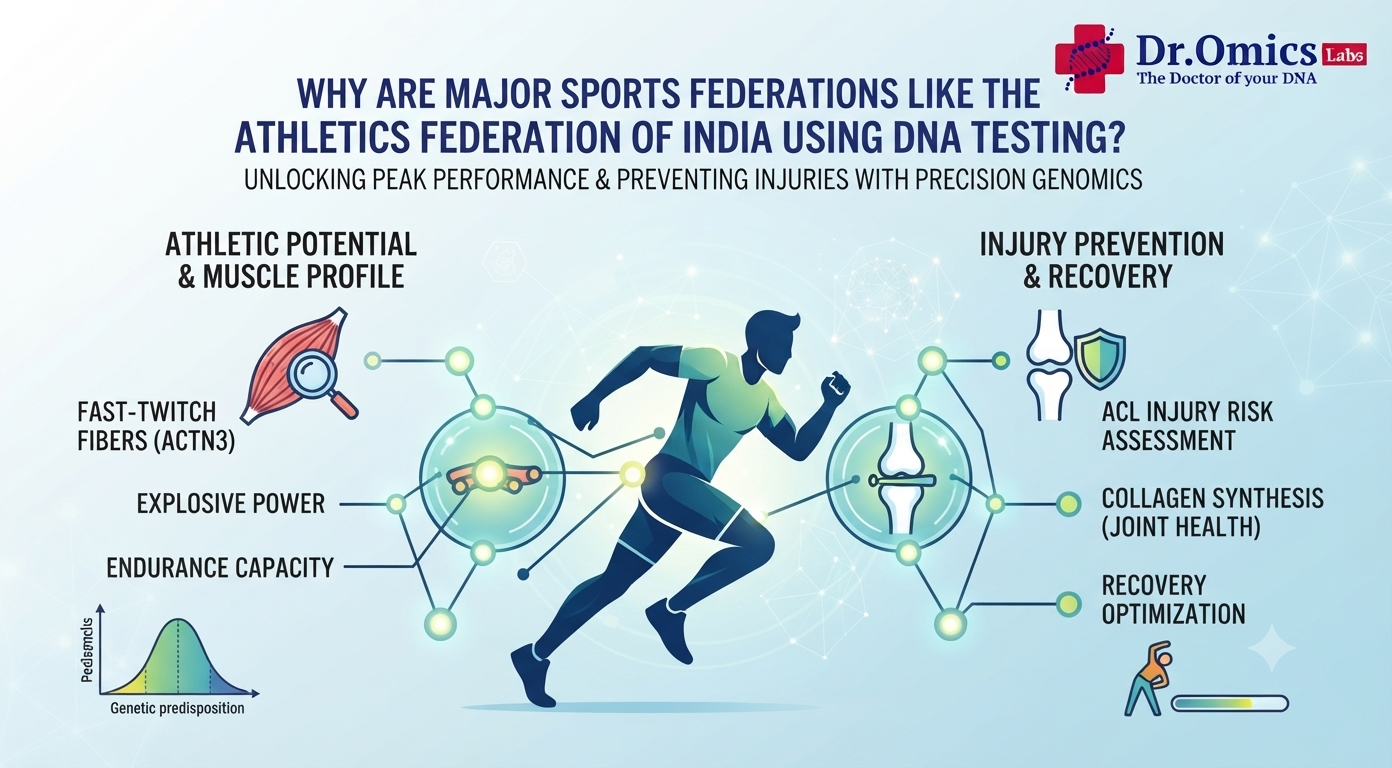
In the evolving world of high-performance sports, the pursuit of marginal gains has led organizations—including elite bodies like the Athletics Federation of India (AFI)—to look beyond traditional coaching and into the biological blueprint of their athletes. While hard work, diet, and discipline remain the foundation of athletic success, modern sports science is increasingly leveraging DNA testing to provide a more precise, data-driven edge.
The Role of Genetics in Athletic Potential
Athletic performance is a complex trait, with studies suggesting that genetic factors contribute to 30% to 80% of the variation in physical traits. DNA testing does not “predict” a gold medalist; rather, it provides an objective view of an athlete’s physiological predispositions.
For instance, the ACTN3 speed gene is a primary marker for muscle fiber composition. The R577X variant can indicate a higher proportion of fast-twitch muscle fibers, which are vital for explosive power in sprinting, whereas other markers may suggest a greater capacity for endurance. Understanding these markers—alongside VO2max genetics—allows coaches to optimize training with DNA by tailoring volume and intensity to match an athlete’s natural biological profile.
Injury Prevention: A Critical Application
Perhaps the most significant value of sports DNA testing lies in injury prevention. Professional federations use genetic insights to assess an athlete’s susceptibility to soft-tissue and structural issues.
- Structural Integrity: Markers like COL1A1 and COL5A1 are linked to collagen production and tendon resilience. Knowing these risks can help in how to use DNA for injury prevention, such as identifying athletes at a higher ACL injury risk and implementing targeted strength and mobility programs to stabilize joints.
- Recovery Optimization: Genetics heavily influences how recovery time is managed. Genes related to inflammation, such as IL6, help determine how quickly an athlete recovers from micro-damage. By monitoring these markers, federations can adjust rest protocols, ensuring that athletes train at the edge of their capacity without crossing into overtraining.
Beyond the Myths: What DNA Testing Can and Cannot Do
It is essential to distinguish between scientific application and “genetic doping” or “talent scouting” myths. Sports DNA testing is not a mechanism for selecting or discarding athletes; it is a tool for personalization.
- Accuracy: Is sports DNA testing accurate? Yes, when interpreted correctly by sports scientists, it provides reliable data on biological predispositions. However, it is not a “magic bullet”—lifestyle, training, and mental resilience remain the dominant factors in success.
- Personalization: Every athlete responds differently to training loads and nutrition. DNA insights allow for customized nutrition plans—such as adjusting protein intake based on muscle repair efficiency or fine-tuning fat oxidation rates for endurance athletes.
Conclusion
Major sports federations are turning to DNA testing not to replace the human element of coaching, but to enhance it. By integrating genetic insights, teams can move away from standardized, “one-size-fits-all” training models toward a precision-based approach. Whether it is identifying the right speed gene profile for a sprinter or crafting recovery protocols to mitigate ACL injury risk, DNA testing provides a sophisticated framework to sustain long, successful careers. Ultimately, genetics informs the “how”—helping athletes and coaches work smarter, train with purpose, and unlock the unique potential hidden within their own biological blueprint.

