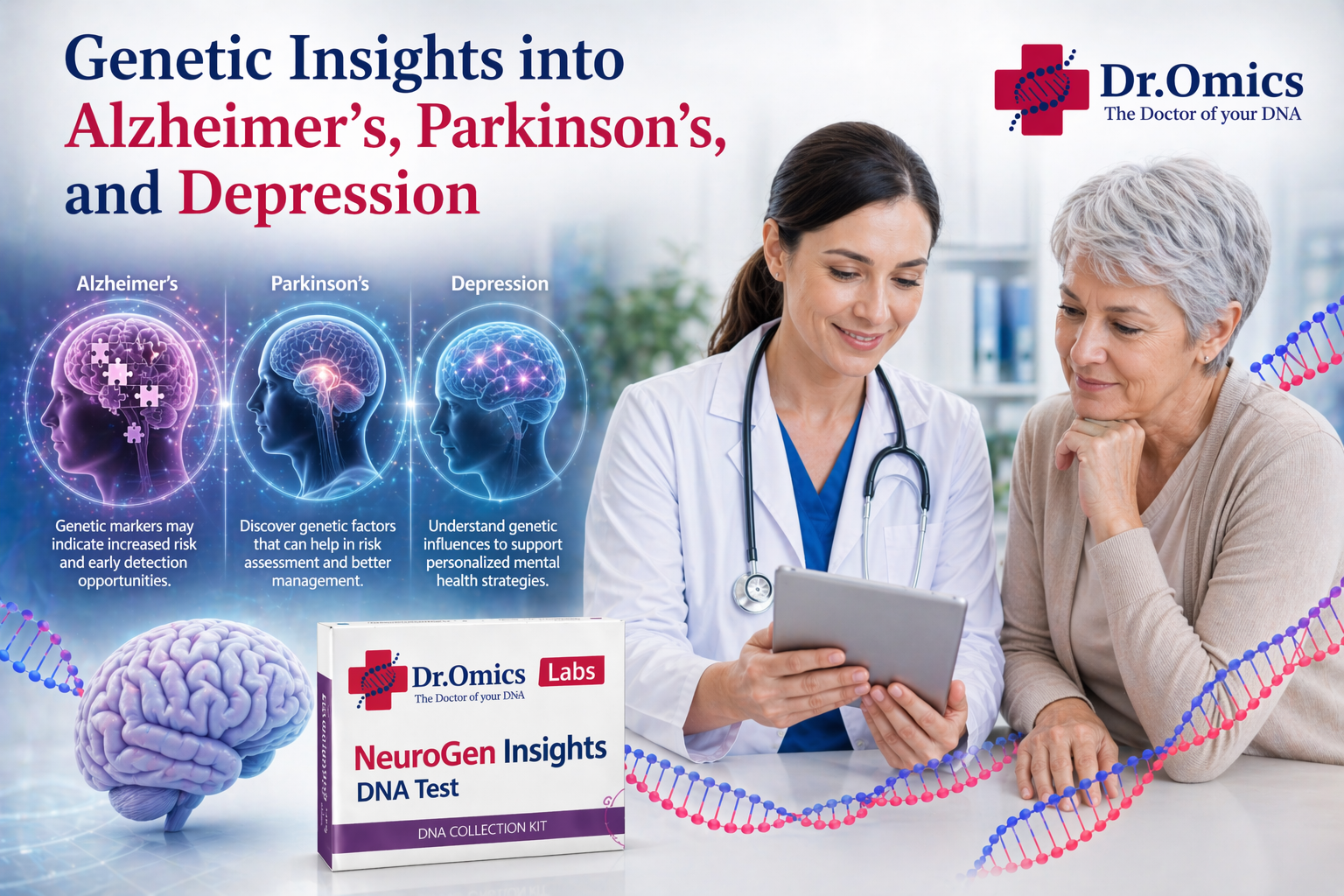
Neurological disorders such as Alzheimer’s disease, Parkinson’s disease, and depression affect millions of people worldwide and place a significant emotional and economic burden on families and healthcare systems. While lifestyle and environmental factors play a role, science has shown that genetics strongly influences brain health and disease risk. With advances in neuro precision medicine, tools like neurogenetic testing and the DNA brain test are reshaping how we understand, predict, and manage neurological conditions.
The Role of Genetics in Brain Disorders
The brain is governed by complex genetic networks that regulate neurotransmitters, inflammation, synaptic function, and neuronal survival. Variations in these genes can increase vulnerability to neurodegenerative and neuropsychiatric disorders. Brain genomics helps decode these variations, offering insights into why some individuals develop neurological diseases while others do not.
A neurological DNA test does not diagnose disease on its own, but it reveals genetic predispositions that can guide early intervention and personalized care.
Neuro Precision Medicine: A New Era in Brain Health
Neuro precision medicine focuses on tailoring prevention and treatment strategies based on an individual’s genetic profile. Instead of treating all patients the same, this approach recognizes that genetic differences influence disease onset, progression, and response to therapy.
By integrating genetic data with clinical evaluation, personalized neurology allows clinicians to move from reactive treatment to proactive brain health management—especially critical for conditions like Alzheimer’s, Parkinson’s, and depression.
Genetic Insights into Alzheimer’s Disease
Alzheimer’s disease is characterized by progressive memory loss and cognitive decline. Genetics plays a major role, particularly in how the brain processes amyloid plaques and tau proteins. Variants in certain genes can significantly increase the risk of developing Alzheimer’s later in life.
Through neurogenetic testing, individuals can understand their genetic susceptibility and take preventive measures early. A DNA brain test may highlight genes linked to inflammation, lipid metabolism, and neuronal repair, all of which influence cognitive aging.
With these insights, personalized neurology strategies may include:
- Cognitive training and brain stimulation activities
- Nutrition plans supporting brain metabolism
- Lifestyle changes to reduce neuroinflammation
- Early monitoring of cognitive function
Genetic awareness empowers individuals to act before symptoms appear.
Parkinson’s Disease and Brain Genomics
Parkinson’s disease primarily affects movement but also impacts mood, sleep, and cognition. It is associated with the degeneration of dopamine-producing neurons. Brain genomics has identified genetic variants that affect mitochondrial function, oxidative stress, and dopamine regulation—key mechanisms involved in Parkinson’s progression.
A neurological DNA test can help identify individuals at higher genetic risk, even before motor symptoms develop. In clinical settings, neuro precision medicine supports personalized treatment planning, helping clinicians choose therapies that align with a patient’s genetic response profile.
Genetic insights may also guide lifestyle interventions aimed at protecting neuronal health and slowing disease progression.
Depression Through the Lens of Neurogenetics
Depression is one of the most common mental health disorders, yet its causes are highly individualized. Genetics influences neurotransmitter balance, stress response, and emotional regulation. Neurogenetic testing can reveal how genes affect serotonin, dopamine, and norepinephrine pathways.
A DNA brain test can help explain why some individuals respond well to certain antidepressants while others experience side effects or limited improvement. This knowledge supports personalized neurology, reducing the trial-and-error process often associated with mental health treatment.
Genetic insights can also inform non-pharmacological strategies such as stress management, sleep optimization, and targeted lifestyle modifications.
Personalized Neurology in Clinical Practice
Personalized neurology combines genetic insights with clinical evaluation to design individualized care plans. For complex neurological conditions, this approach improves treatment accuracy and patient outcomes.
Benefits include:
- Early identification of disease risk
- Optimized medication selection
- Reduced adverse drug reactions
- Customized lifestyle and wellness strategies
By using neurogenetic testing, clinicians gain a deeper understanding of disease mechanisms unique to each patient.
The Preventive Power of Neurogenetic Testing
One of the greatest advantages of neuro precision medicine is prevention. Genetic insights allow individuals to take proactive steps to protect brain health long before symptoms emerge. A neurological DNA test provides a roadmap for long-term cognitive and emotional wellness.
As awareness of brain genomics grows, genetic testing is increasingly being used not only in hospitals but also in preventive wellness programs.
The Future of Brain Health Care
The future of neurology lies in personalization. As research advances, neuro precision medicine will continue to refine how we prevent, diagnose, and manage brain disorders. From Alzheimer’s and Parkinson’s to depression, genetic insights are reshaping brain health care into a more predictive, precise, and patient-centered discipline.
Conclusion
Genetic science is transforming our understanding of neurological disorders. Through neuro precision medicine, DNA brain tests, and neurogenetic testing, conditions like Alzheimer’s, Parkinson’s, and depression can be approached with greater clarity and personalization. Personalized neurology empowers individuals and clinicians to move beyond symptoms, focusing instead on long-term brain health guided by genetics. The future of neurology is not just advanced—it is personal.