
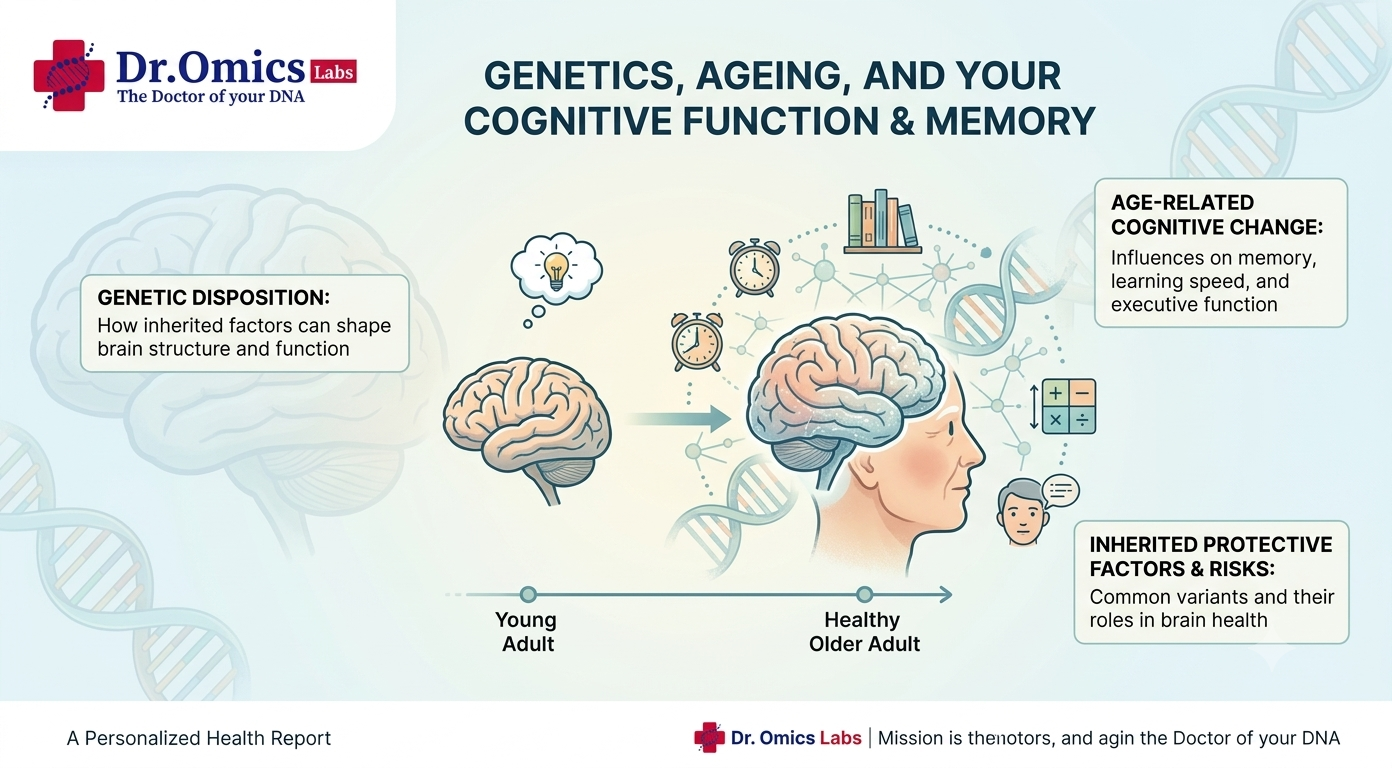
As people grow older, changes in memory, concentration, and cognitive performance are common. While lifestyle, nutrition, sleep, and physical activity all play important roles, genetics also significantly influence brain health. Today, advances in genetic testing for brain health provide valuable insights into inherited risks, helping individuals make proactive decisions to support lifelong cognitive wellness.
Can DNA Predict Alzheimer’s Risk?
One of the most common questions is, can DNA predict Alzheimer’s risk? The answer is partially yes. Certain genetic variants, particularly in the APOE gene, are associated with an increased likelihood of developing late-onset Alzheimer’s disease. However, carrying a risk variant does not guarantee that a person will develop the condition. Instead, it highlights the importance of adopting preventive lifestyle strategies and regular medical monitoring.
What Genes Affect Memory and Cognition?
Several genes contribute to learning ability, memory formation, neurotransmitter regulation, and overall brain performance. Researchers continue to identify what genes affect memory and cognition, including COMT, BDNF, APOE, MTHFR, and DRD2.
Many people also ask, what is COMT gene for brain health? The COMT gene regulates dopamine metabolism in the brain. Since dopamine influences attention, executive function, and emotional regulation, variations in this gene may affect stress resilience, decision-making, and cognitive flexibility.
Does DNA Affect Neurotransmitter Processing?
Yes. Many genes control how neurotransmitters such as dopamine, serotonin, glutamate, and GABA are produced, transported, and broken down. Understanding does DNA affect neurotransmitter processing helps explain why individuals may respond differently to stress, medications, or environmental factors.
Similarly, what is methylation in brain health is becoming an increasingly important topic. DNA methylation is an epigenetic process that regulates gene activity without changing the DNA sequence. Healthy methylation supports neurotransmitter synthesis, detoxification, and cognitive function throughout life.
Can Pharmacogenomics Guide Psychiatric Medication?
Modern pharmacogenomics is transforming mental healthcare. Patients frequently ask, can pharmacogenomics guide psychiatric medication? Genetic testing can identify variations in drug-metabolizing enzymes, helping physicians choose medications that may be more effective while reducing the likelihood of adverse effects.
Likewise, can DNA test guide mental health treatment has become a practical clinical question. While genetics cannot diagnose depression or anxiety on their own, they provide valuable information that complements clinical evaluation.
Genetics and Neurological Disease Risk
Many individuals wonder, what neurological conditions can genetic testing detect? Depending on the test, it may identify inherited susceptibility for conditions such as Alzheimer’s disease, Parkinson’s disease, Huntington’s disease, hereditary neuropathies, epilepsy syndromes, and certain neurodevelopmental disorders.
People also ask, can DNA show Parkinson’s disease risk and can DNA predict neurodevelopmental disorders. Genetic variants associated with these conditions can be detected in some individuals, although environmental and lifestyle factors also contribute to disease development.
Researchers continue investigating how does genetics influence depression risk, recognizing that multiple genes interact with life experiences rather than acting independently.
Using Genetics for Healthy Brain Aging
As neurogenomics advances, people increasingly ask can DNA test guide dementia prevention and how to use genetics for stress management. Although genetic information cannot prevent disease by itself, it helps personalize nutrition, exercise, cognitive training, sleep optimization, and stress reduction strategies.
Understanding how to interpret neuro genetic results is equally important. Results should always be reviewed alongside family history, medical evaluation, and, when appropriate, genetic counseling.
Many also wonder, how accurate are neuro genetic tests and is neuro genetic testing reliable. When performed by accredited laboratories using validated technologies, these tests are highly accurate for detecting specific genetic variants. However, they estimate risk rather than predict certainty.
The Future of Neurogenomics
The latest breakthroughs in neurogenomics combine whole-genome sequencing, epigenetics, artificial intelligence, and pharmacogenomics to better understand cognitive aging. Scientists continue identifying key neurological genetic markers that may improve early detection and enable more personalized prevention strategies.
Ultimately, genetics provide a blueprint—not a destiny. By combining genetic insights with healthy lifestyle choices and regular medical care, individuals can take meaningful steps toward preserving cognitive function and supporting brain health as they age.

